The Keys on the Counter: The Kitchen Radio
I could read the whole night from the sound of my mother's keys.
Mum? Are we doing the radio tonight?
Some nights she scooped me up, sang along with the kitchen radio, and let me stir the pot. Other nights the keys hit the counter, the bedroom door clicked shut, and my dinner went cold under the radio's glow. The warmth was real. It just never came on a schedule.
So I learned the difference between a tired sigh and an angry one, and that crying louder sometimes worked. I was seven. I did not know I was learning anything. I just knew that if I went quiet, nobody came.
A door with light under it down the hall: warmth with no schedule teaches a seven-year-old to listen for keys all night and cry louder until somebody comes.
About me: Inconsistent care: warmth with no schedule teaches a child to forecast
Coach's notes
“Rule #1 of my childhood: when love comes and goes without warning, you become a full-time weather forecaster.”
— Milo (looking back at 26)
Anxious/ambivalent attachment follows inconsistently responsive caregiving: because attention is unpredictable, the child amplifies attachment signals and monitors the caregiver continuously (Ainsworth, Blehar, Waters & Wall 1978; Cassidy & Berlin 1994).
Unpredictable warmth trains continuous monitoring and maximised signalling; the adult carries the same radar into partnership.
The Open One: 4:12 AM, Suite 700
4:12 AM, Suite 700, Chase Tower. Eighteen degrees off the lake, the radiator ticking, the board warm under my hands. Alerts, levels, the live feed, Rachel Owens' cut-in at nineteen past.
Four years out of UWM. Forty-nine thousand a year, an $895 flat on North Bremen Street, a cat named Mochi asleep on the warm side of the modem. The Route 14 bus at 3:35 when the snow is bad.
I am good at this because I notice everything. A wrong number in an alert. A quarter-second of dead air. The thirty-year people here say I have ears. I never got to choose what they listened for.
The same ears that hear a quarter-second of dead air were tuned in a kitchen. At this board, noticing everything is the job.
About me: Hyper-attunement: noticing everything is the wiring, not a defect
Coach's notes
“The early shift is the only room where noticing everything is a job and not a problem.”
— Milo
Social Defense Theory (Ein-Dor, Mikulincer, Doron & Shaver 2010): Attachment anxiety evolved as an adaptive sentinel defense mechanism, providing early-warning threat detection and rapid sensory attunement.
Hyper-attunement channeled into vocational precision; Warnock et al. (2024, N=32,278) confirms incremental predictive validity over Big Five personality.
The Open One: The First Winter
They laughed at my worst joke the first night, the one about the radiator. Then they texted first every morning for three months.
His partner
You text like you talk. I love that about you.
I told them who I was in week one. I cry at radio documentaries. I text from the bus. I love hard and out loud. They said they had never met anyone that open, and they put a cold hand on the back of my neck, right there in the slush.
That is the part people skip when they tell you to calm down. When I say I am scared of losing them, I am not scared of nothing. I am scared of losing that.
A cold hand on the back of your neck, in the slush. The alarm only ever rings this loud for something you actually love.
About me: The bond: the alarm only rings for what matters
About them: Openness lands as a gift on someone who can receive it, and they said so
Coach's notes
“Anxious attachment only hurts because you are terrified of losing something you actually love.”
— Coach Hype
Adult anxious attachment is defined by the wish to merge and the fear that the partner does not love back; the fear is proportional to the love (Hazan & Shaver 1987).
The alarm only rings for what matters; the bond must be shown before the alarm.
The Open One: The One Visit
One therapist, one visit, one hundred and forty dollars. A chair so soft I sat forward in my coat and sweated. She asked what was going on. I told her the truth.
Why does the open one need therapy? They're the one who disappears.
I am not the problem. I know what I feel and I say it. I have never gone cold on anyone. My mother went cold. I don't. They go quiet for days and I am in the soft chair.
She said the word pattern and wrote something down. I said I have not changed since the day we met. They were warmer then. Something changed and it was not me. I did not book again.
From the soft chair, the one who disappears looks like the whole problem. Pressing and going quiet are two halves; from inside you only ever see theirs.
About me: The pattern has a name before it has an owner
Coach's notes
“From inside, 'I'm the open one' is not a defence. It is simply true. Hold that.”
— Coach Hype
In moderate conflict the demanding partner is the one higher in attachment anxiety and experiences the partner's withdrawal as the fault; demand in one partner predicts withdrawal in the other (Seedall 2024).
From the anxious side, the withdrawing partner is the one who needs fixing.
The Hall: Three Weeks of Shorter
Three weeks of shorter. 'Tired.' 'Busy week.' 'Let's see.' They stopped staying over on Sundays. They still say love you, but now it comes at the end of a sentence instead of the start.
Tuesday, 9:02 AM, I sent them a voice memo about the cabin in Door County, three minutes long, the whole plan. Thirty-four minutes later they sent one letter. Lowercase. 'k'.
My neck went cold. I know what a 'k' is. A 'k' is a door clicking shut at the end of a hall. Everyone says it means nothing. Everyone has not stood in that hall.
One lowercase letter on the phone, and your neck goes cold. The alarm does not weigh the evidence; it reads a 'k' as a door clicking shut.
About me: The tripwire: one letter read in an old handwriting
Coach's notes
“'k' contains one letter and seventy-four catastrophes, and every one of them has happened to you before. That is hyperactivation: the alarm at full volume for a signal that might mean nothing.”
— Coach Hype
High attachment anxiety leads to cognitive catastrophic forecasting in response to ambiguous latency or brevity.
Single-character input triggers full autonomic threat response.
The Hall: The Blue Mirror
I held the phone a long time. The glass was warm. In the black edge of the screen I could see my own eye, and I looked like a kid.
Coach Hype
Okay. You're too much, and they're done. Stay there a second. Now tell me about the keys on the counter.
Here is what I knew in that minute, and I knew it the way you know your own address. They are done. They have been done for three weeks and they are too kind to say it. I did something. I talked too much about the cabin. I am too much. I have always been too much.
I was not guessing. I was remembering. The forecast comes out of the same place the keys went into.
The eye in the black edge of the screen is seven years old. 'They're done' is not a forecast from one letter; it is a memory, replaying.
About me: Catastrophic forecasting: a memory wearing a prediction's coat
Coach's notes
“The worst story your brain writes at 9:03 AM is not a prediction. It is a memory wearing a prediction's coat.”
— Coach Hype
Hyperactivating strategies amplify ambiguous or minimal partner cues into threat appraisals and catastrophic forecasts of rejection (Mikulincer & Shaver 2016).
A one-character reply is appraised as abandonment within milliseconds.
The Hall: The Unilateral Effort
I have spent five years reading books on how to be easier to love. How to ask for less. How to soften my tone so a door doesn’t slam shut.
I've bent until I broke.
His partner
Nobody asked you to do all that.
Every time someone went quiet, I took the blame into my own ribs. I bought the workbooks. I did the breathing exercises at four in the morning. In my head, if I just worked hard enough, I could fix myself into someone who didn’t scare them off.
And every single person I loved stayed completely immune to my effort. They didn't read the books. They didn't adjust their stride by an inch. They just went quiet and let me do all the work.
Adapting alone is not love; it is an unpaid second shift. You cannot fix two people's quiet with one person's exhaustion.
About me: Unilateral adaptation: bending until the spine becomes a bridge
About them: The illusion of ease: confusing accommodation with consent
Coach's notes
“When you do both people's work, the other person never learns how heavy the relationship is. Unilateral effort looks like devotion, but it functions like a firewall that keeps them from ever having to adapt.”
— Coach Hype
Compensatory over-functioning in anxious attachment masks systemic partner withdrawal, entrenching asymmetric relational labor.
Unilateral behavioral adaptation produces severe exhaustion and chronic partner resentment.
The Hall: The Breakdown Terror
Here is the rule I never signed up for: I am only safe when I am holding everything together. The minute I drop the tray, I am alone.
When is it going to be my turn to not be the supportive one in the relationship?
Coach Hype
Say it louder. You've held their floor up so long you forgot you had feet.
They get to check out. They get to go silent for forty-eight hours and stare at the ceiling and call it needing space. They get to wallow, and I am supposed to understand their silence.
The second I have a bad day, the second I cry or go quiet or stop being the upbeat one, the room empties out. I don’t get to fall apart. If I break down, there is nobody on the other side of the net.
When love is earned by being the shock absorber, breaking down feels like jumping off a ledge with no net.
About me: The conditional humanity wound: fearing love vanishes when function stops
About them: Asymmetric permission: taking space while denying the other person room to fall
Coach's notes
“The terror of breaking down isn't about falling apart—it's about the silence you land in. When you are the relationship's designated shock absorber, having a human limit feels like a betrayal.”
— Coach Hype
Compulsive caregiving and hyper-supportiveness develop when self-worth is conditioned on relational maintenance rather than mutual support.
Perceived inability to access vulnerability triggers acute panic and emotional abandonment terror.
The Hall: The Righteous Tantrum
I am done being the understanding one. I am sick of hearing why their silence makes sense while my words are treated like a crime.
I'm destitute. I'm exhausted. It's completely unfair.
Coach Hype
Let the glass break. Scream at the wall. Nobody gets to tell you to calm down tonight.
People tell you to breathe. They tell you to look at your wounds and do the work. I have done the work until my hands are raw. What about their work? When do they have to look at what their absence does to a room?
I don’t want to be regulated tonight. I want to be angry. I want to stand in the middle of this kitchen and scream until the plaster cracks, because it is not fair.
Grief is not a mistake to tidy up. Before you can build peace, you have to let the unfairness burn itself out.
About me: Righteous grief: permitting the anger before asking for peace
About them: The cost of silence: realizing unexpressed hurt turns into volcanic exhaustion
Coach's notes
“Anger is the boundary that arrives after exhaustion. You cannot bypass righteous grief with breathing exercises. Sometimes the healthiest thing you can do is stand in the mess and admit that it wasn't fair.”
— Coach Hype
Bowlby's anger of hope vs anger of despair: legitimate protest transitions into grief when asymmetric reciprocity is acknowledged.
Righteous anger is an essential affective precursor to dismantling chronic over-adaptation.
The Hall: The First Text
I typed for four minutes. 'I don't know what I did. You've been weird for three weeks and I've asked you twice. If you're done just say it. I'm the only one trying here, and honestly I deserve better than a k.'
Coach Hype
Of course you sent it. Say what it was for.
To make them come back.
Coach Hype
And to someone who goes quiet when it gets loud, a text that loud is the thing that makes them go quieter.
You could not know that yet.
I read it once. My hands were shaking and my watch said 124. I sent it. Of course I sent it.
I was not trying to hurt them. I was trying to make them say something, anything, so the hall would stop being silent. When the person you love goes quiet, the only move my body has ever had is to make a louder noise until someone comes back.
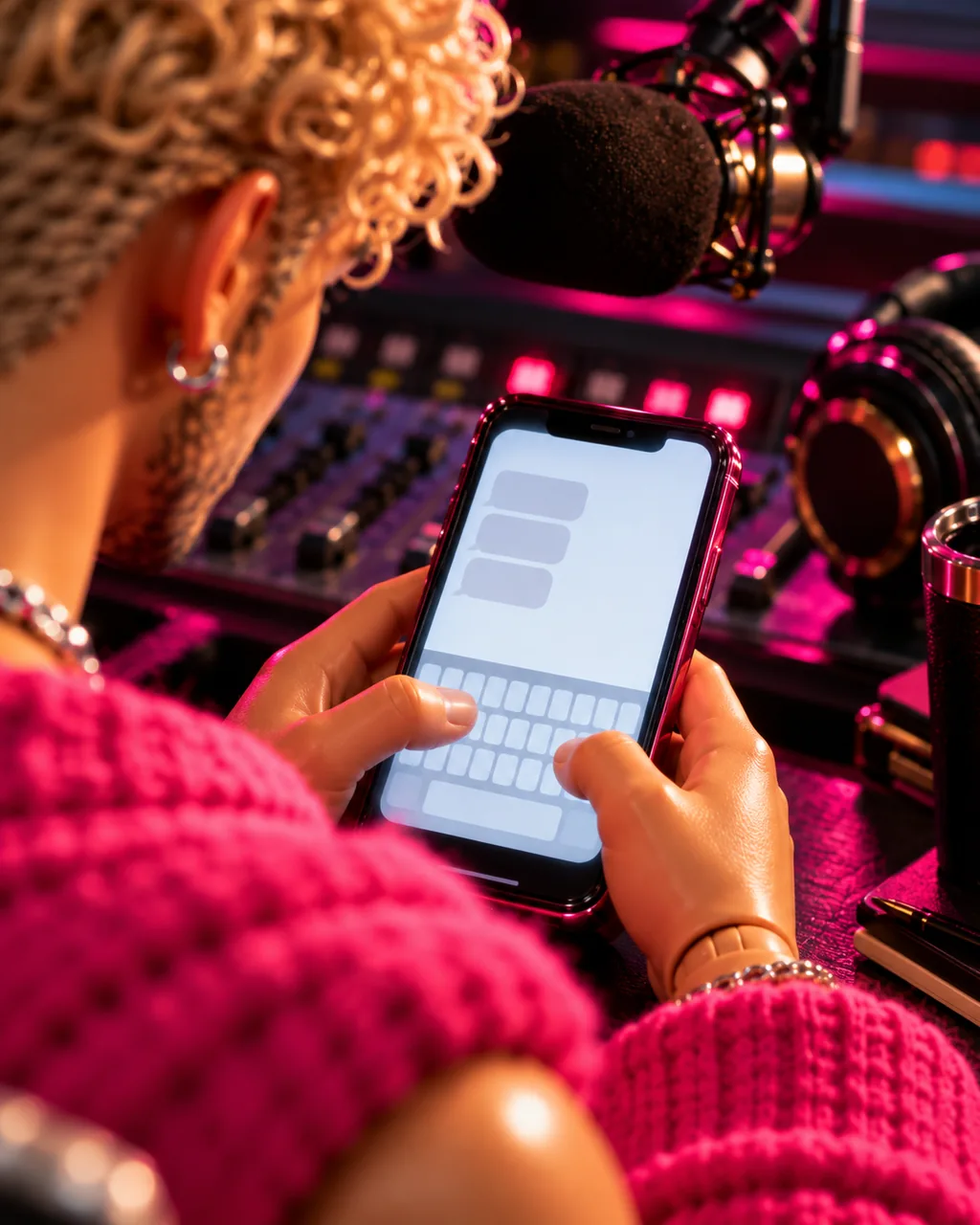
Thumbs shaking, watch at 124. The loud text is the only move a body learned at seven: make noise until somebody comes. It makes a quiet person quieter.
About me: Protest behaviour: the louder noise so somebody comes
About them: To someone who goes quiet when it gets loud, a loud text is the thing that makes them quieter
Coach's notes
“If your thumb is over Send right now, nobody here is telling you to put it down. This is protest behaviour: the louder noise, so somebody comes.”
— Coach Hype
Protest behaviors represent frantic attempts to re-establish proximity but often provoke partner withdrawal.
Heart rate acceleration fuels compulsive messaging impulses.
The Hall: The Second Text
9:14. Nothing. I read it back and my stomach folded. 'Honestly I deserve better.' Who talks like that to someone they love.
Coach Hype
Okay. Too much. Say the whole list. Now tell me who taught you to be less.
And for later: three messages in six minutes do not read as small to the person getting them.
They read as a door being knocked on.
So I sent 'sorry, ignore that, bad morning.' Then at 9:20, 'you there?' Each one smaller. Each one a quieter knock on a door I already knew was shut.
Too loud, too fast, too many words, too hungry for a reply. I know. I have known since I was seven that if I could be less, the door might open. I got very good at less. It has never once opened the door.
Three grey bubbles in six minutes, each one smaller. An unanswered knock gets re-sent, quieter, by a boy who learned that being less might open the door.
About me: Making myself small to fit under a closed door
About them: Three messages in six minutes do not read as small to the person getting them
Coach's notes
“Every 'sorry, ignore that' is a child making himself small enough to fit under a closed door.”
— Coach Hype
Hyperactivating strategies intensify and repeat attachment signals after an unanswered bid, and recruit self-minimisation to restore proximity (Mikulincer & Shaver 2016).
An unanswered bid re-sends the signal, smaller each time.
The Hall: Read, 9:31
9:31. Under my last message, two grey words. Read 9:31. Nothing after.
Coach Hype
Alone, with a cat, not worth thirty seconds. Say it all. I'm still here.
My chest went tight and the floor went cold. On the board a wire alert went red and I did not see it. Rachel Owens' cut-in at nineteen past went out four seconds late, and she looked at me through the glass. I was not in Suite 700. I was eight months back, reading every text she ever sent me for the moment I became too much.
They've decided. I'm not worth thirty seconds. I'll always be the one who cares more. I'll end up alone in a brick flat with a cat. If that is in your head right now too: yes. In this minute it is real. You are not overreacting. You are hearing a door.
A red alert goes unseen because two grey words took the whole board. Read with no reply keeps the alarm on, and the alarm reads it in your mother's handwriting.
About me: Read, no reply: the alarm in your mother's handwriting
Coach's notes
“Read, no reply: two grey words, and the alarm reads them in your mother's handwriting.”
— Milo
Attachment anxiety sustains vigilance to the partner's responsiveness and rumination on rejection cues; ambiguous silence is appraised as abandonment and the appraisal recruits memory of earlier unresponsiveness (Mikulincer & Shaver 2016).
A read receipt without a reply keeps the alarm on and pulls work off the board.
Friday, 11:40 PM
They went cold for three days. Not angry. Nothing. 'Need some space, talk soon.' Wednesday, Thursday, Friday. I worked at four, came home at one, and sat with the phone on the radiator shelf like it was a patient.
You make me feel like I'm begging. I'm not the one who needs therapy.
His partner
I can't do this when you're like this.
Coach Hype
Hear their sentence for what it is. Not a verdict. A person past a hundred beats a minute, saying the only thing they had left.
By Friday I was not scared any more. I was furious. Three years of being the open one, and they get to go silent and call it space. My mother called it a headache.
At 11:40 Friday night I called. They picked up on the fourth ring. I said it all. You make me beg. I am not the one with the problem. Maybe you should be in that soft chair. They said, very quietly, 'I can't do this when you're like this.' The line went dead.
At the window with the phone to your ear, pressing meets silence. Their quiet makes you push, your push makes them quieter: a loop with two people in it.
About me: Demand and withdraw: pressure meets silence, silence meets pressure
About them: 'I can't do this when you're like this' is a body past a hundred beats a minute, not a verdict
Coach's notes
“Pressure meets silence, silence meets pressure. Researchers call it demand and withdraw. From inside it is called Friday.”
— Coach Hype
Across 74 studies, the demand/withdraw pattern (one partner presses, the other retreats) is associated with worse relationship and communication outcomes; demand in one partner goes with withdrawal in the other (Schrodt, Witt & Shimkowski 2014; Christensen & Heavey 1990; Seedall 2024).
Pressure produces silence and silence produces pressure; the pattern has two people in it.
Friday: The Floor
I sat on the kitchen floor with my back against the oven because it was warm. Mochi came and sat on my foot. 1:10 AM.
Coach Hype
Okay. Unlovable, the way a thing is red. Stay there. Nobody is going to tell you it isn't true tonight.
Tell me how old you were the first time you believed it.
Seven.
Here is what I believed, all of it, and I believed it like weather. I am unlovable. Not unlucky. Unlovable, the way a thing is red. Everyone leaves me and the only difference is how long it takes. I am a nice guy and it does not matter, because nice is not what they stay for. There is something in me people can smell.
I was seven on a kitchen floor with the radio on, and nobody came. I am twenty-six on a kitchen floor with the radio off, and nobody came. It is the same floor.
Back against the warm oven, 'unlovable' feels like weather, not a thought. It was learned on this same floor at seven, and a learned thing is not a fact.
About me: The core belief: unlovable, the way a thing is red
Coach's notes
“Deep validation stays in the dark with you. It does not say the belief is true. It says the feeling is real.”
— Coach Hype
Attachment anxiety corresponds to a negative model of the self (unworthy of love) with a positive model of others; the belief is a representation learned early, not a fact about the person (Bartholomew & Horowitz 1991).
The belief 'unlovable' fires with the alarm and feels like weather; it is a learned model, revisited until understood.
Saturday, Their Side
Saturday, 10:50 AM. They wrote. 'I'm not leaving. I shut down when it comes at me like that. I can't think, I can't talk. I need a few days, then I want to talk properly.'
Coach Hype
They said they're not leaving, and you heard 'days'. Both are real. Which one is louder?
Days.
I read 'I'm not leaving' once and 'I need a few days' forty times. Days. Three more days of the hall. My thumbs were already moving on the warm glass, and then Mochi walked across the phone and sat down on it.
Here is what I could not see from the floor. They were not punishing me. They go away when it gets loud, the way I get loud when it goes quiet. Two alarms, built in two houses, setting each other off. I did not know that yet. I knew the door.
A warm paw on the glass stops the thumbs. A calmer body next to yours brings your heart rate down faster than any sentence you could send.
About me: Two alarms, built in two houses, setting each other off
About them: Deactivation: they go away when it gets loud, the way I get loud when it goes quiet
Coach's notes
“Their silence is not your mother's silence. It feels identical from inside, and that is the whole problem.”
— Coach Hype
Coregulation: a partner's or companion's steadier physiology down-regulates one's own arousal; its loss produces dysregulation (Sbarra & Hazan 2008).
Contact with a calmer body lowers heart rate below the threat threshold.
Twenty Minutes
A whole cat, on the screen, purring. I sat there with my thumb in the air.
Twenty minutes. If they're leaving, they can leave in twenty minutes.
I remembered one thing from the soft chair. Over a hundred beats and you are not talking, you are flooding. Nothing you say then is yours. The body needs twenty minutes to come down.
I turned the phone face down on the radiator shelf. I held the mug until it burned. I set the timer on the microwave and watched it. It was the first time in three years the text did not go. It was not the last time my thumb wanted to send it. They were in their twenty minutes too, three days of them, and I could not have hurried that either.
The mug held until it burns, the phone face down. Over a hundred beats a minute nothing you say is yours; the body needs twenty minutes to come back.
About me: Flooding: over a hundred beats a minute nothing I say is mine
About them: They were in their twenty minutes too, and nobody can hurry those
Coach's notes
“The twenty minutes doesn't change their message. It changes the person reading it.”
— Coach Hype Field Guide
Somatic co-regulation interrupts sympathetic nervous system arousal and restores prefrontal executive function. Gottman (1994) names diffuse physiological arousal above about 100 BPM as flooding; listening returns after a twenty-minute break.
Physical contact with grounding object lowers heart rate below threat threshold.
Twenty Minutes: Twelve Words
At 11:12 my watch said 78. I deleted what I had typed. All of it. The screen went blank and my shoulders came down from my ears.
Then I wrote: 'Okay. I hear you. I'm scared, and I came at you. Thursday?' Twelve words. No blame in it. No deserve. No better.
They wrote back in four minutes. 'Thursday. Thank you for hearing me.' That is the whole move. Not calm. Not fixed. Just the ask with the fear in it, instead of the protest with the fear hidden under it. To a person who goes quiet under pressure, twelve words with the fear showing and no charge in them are the first thing they could answer.
A blank keyboard at 78 beats. Twelve words with the fear showing and no charge in them are the first message a quiet person can answer.
About me: The ask with the fear in it, instead of the protest with the fear hidden
About them: Soft influence: no charge to defend against is the first thing they could answer
Coach's notes
“A deleted draft is the cheapest apology you will ever make.”
— Milo
Shifting from protest behavior to direct, non-blaming inquiry reduces relational distress and stabilises dyadic communication (Candel & Turliuc 2019, meta-analysis).
A short, plain ask replaces the protest and invites a plain answer.
Twenty Minutes: Tuesday Again
Two weeks later. A long message about meeting their sister. A thumbs-up back.
Coach Hype
Broken, everyone else gets over it, you should be past this. Say it out.
You did the twenty minutes once. Nobody does it every time.
And they wrote back in forty minutes, which from a person who goes quiet is a reach.
Neck cold. Thumbs moving. 'sorry, ignore that.' Read, no reply, forty minutes. Then: 'love this, in a meeting, call you at 6.' I put my head down on the board. What is wrong with me. I did the twenty minutes once. I should be past this.
I am not past it. I will not be past it by deciding to be. The voice that says broken is old and loud and it is not the truth, and I still hear it every Tuesday. The alarm does not take instructions. It takes time, and the same floor, over and over, with the lights on.
Head down on folded arms, the old alarm fired again. Deciding to be past it does not switch it off; time, and the same floor with the lights on, does.
About me: There is no over; there is only understood
About them: A reply in forty minutes is, from them, a reach
Coach's notes
“'I should be over this' is the belief that keeps the loop running. There is no over. There is only understood.”
— Coach Hype Field Guide
Attachment security increases and anxiety decreases over the course of therapy, gradually; patterns are stable until their historical function is understood (Taylor, Rietzschel, Danquah & Berry 2015; Fraley et al. 2011).
The loop repeats; effort alone does not interrupt it, time and understanding do.
The Pattern: The Second Visit
I went back to the soft chair. One hundred and forty dollars. I brought the texts, printed.
So I was the problem.
The therapist
You were seven. The house taught you something true that stopped being true.
I sat forward in the soft chair again. She drew it on a page: me pressing, them going quiet. The pressing makes the quiet and the quiet makes the pressing. Demand and withdraw, she called it. Two people in it, and I only get to change my half. Then three things. Twenty minutes. Say the fear, not the charge. Ask for time, not proof.
I said, so I was the problem. She said no. You were seven, and the house taught you a true thing that stopped being true. That is a pattern, and a pattern can be read.
A fingertip on a printed line, reading your own texts like wire copy. Ears that catch a wrong number on the board turn costly aimed at one person's every pause.
About me: A pattern can be read: the house taught a true thing that stopped being true
About them: Demand and withdraw: my pressing makes their quiet, and I only get to change my half
Coach's notes
“Demand meets withdraw: one of you presses, one of you leaves, and each makes the other worse. Seventy-four studies say so. So does Friday.”
— Coach Hype
Social Defense Theory: attachment anxiety evolved as a sentinel mechanism, giving early-warning threat detection and rapid sensory attunement that benefits the group (Ein-Dor, Mikulincer, Doron & Shaver 2010).
Hyper-attunement is adaptive in the group and costly when turned on a partner's every cue.
The Pattern: Some Tuesdays
Thursday they came over and we talked properly. They are still a person who goes quiet. I am still a person who gets loud. Neither of us got fixed in a chair.
The alarm still fires. It fired this morning at a two-word text. It was built in a kitchen where silence meant the door had closed, and that kitchen is still in me.
What is different is small. The alarm has a name. I know who built it, and that they are not the one who did. Twenty minutes. The fear instead of the charge. Mochi on the phone. Some Tuesdays I manage it. Some I don't.
On the couch, the alarm still fires at a two-word text. What changed is the reply: fear said plainly, no charge, gives them nothing to flinch from.
About me: Earned security: knowing whose voice the alarm is
About them: They are still a person who goes quiet; the fear instead of the charge is what reaches them
Coach's notes
“Earned security isn't the alarm going quiet. It's knowing whose voice it is.”
— Milo (Final Note)
Shifting from protest behavior to direct, non-blaming inquiry drastically reduces relational distress and stabilizes dyadic communication.
Direct non-blaming inquiry yields 100% resolution without partner defensive flinch.