Closeness can feel like an ambush on your freedom, so you go quiet or get busy. Here is why your nervous system puts up the armor—and how to keep your sanctuary while staying connected.
Having an elevated avoidance dial does not make you a narcissist, a robot, or unfeeling. In psychological science, avoidance is an adaptive shield forged when childhood requests for help were met with rejection or overwhelm. Your independence is a brilliant survival skill—it just doesn't have to be a prison.
THE UNDERLYING MECHANISM
"Closeness can feel like too much, so I want to go quiet or get busy."
Attachment science calls this Deactivation. When emotional demands, vulnerability, or relationship expectations rise, your nervous system automatically suppresses attachment needs to protect your sovereignty.
It isn't that you don't have feelings—your heart rate and stress hormones spike under pressure just like anyone else! But your learned reflex is to handle it 100% alone.
The Specialized Adaptation
Operational Composure. Rapid solo containment under pressure. Compartmentalizes fear, severs emotional interference, and executes procedural solutions with surgical autonomy.
The Systemic Tax
Somatic numbness, chronic isolation, inability to receive co-regulation, and sudden burnout from carrying everything alone.
The Graphic Novel Episode
Build It Yourself: The Model Kit
The first time I cried in front of my father I was seven, and I learned the house rule in about four seconds.
I did it by myself.
Soren's father
Good. That's how it's done.
He loved me. He showed it with a model bridge kit on the bed: 'build it yourself, you're clever.' A finished bridge carried in both hands got a nod. A scraped knee got 'you're fine' and a cold flannel.
So I got good at building and better at not asking. By nine I could not have told you what I needed. You can carry that into your thirties without noticing.
A balsa bridge held up in both hands for a nod. When tears get 'you're fine' and a finished thing gets praise, a child learns to build and stop asking.
About me: The rebuffed bid: if help never comes, stop ordering it
Coach's notes
“Rule #1 of a self-contained childhood: if help never comes, stop ordering it.”
— Soren (looking back at 29)
Avoidant attachment follows caregiving that rebuffs attachment bids and discourages the expression of need or distress; the child learns to minimise signals and rely on itself (Ainsworth, Blehar, Waters & Wall 1978; Main & Weston 1981; Cassidy 1994).
Rebuffed bids train signal minimisation; the adult carries 'I'm fine' into partnership.
The Steel Sanctuary: Four Hundred Bridges
Pittsburgh has more than four hundred bridges. More than Venice. Twenty-odd of them are rated structurally deficient on any given year, and I can tell you which, and why, and what it would cost.
I am twenty-nine. I design and inspect pedestrian spans from a titanium chair with hot-pink rims. The hills here are a daily argument I usually win. The office is two rooms over a print shop on the South Side. A bolt rated for 4,000 foot-pounds of shear does not wake up in a mood.
Psychologists call what I do compulsive self-reliance. I call it Tuesday. Either way the hands stay steady and the steel holds.
Calipers steady over a blueprint. A bolt does not wake up in a mood, and a man who learned early to need nobody works best alone, in a crisis, fast.
About me: Compulsive self-reliance: the hands stay steady and the steel holds
Coach's notes
“Bridges make sense: you calculate the dead load, you calculate the wind shear, and nobody expects you to hold hands at brunch.”
— Soren (Calculations Journal)
Social Defense Theory (Ein-Dor et al. 2010; Del Giudice 2011): Attachment avoidance evolved as a rapid autonomous response mechanism, excelling in crisis mitigation and solitary task execution without freezing in group consensus.
Solitary crisis composure channeled into engineering precision; Warnock (2024, N=32,278) confirms high individual task performance.
The Steel Sanctuary: The Quiet Hands
When something goes wrong my pulse stays flat and my hands stay still. It is the most useful thing about me.
A cable sang wrong on a footbridge at 3 AM in February once. Everyone else stood there. I had the load off it in eleven minutes, alone, and went home and slept.
The cost shows up later, in a quiet room, when nothing is wrong and somebody just wants to sit near me. The hands that never shake also never reach.
One hand flat on the blueprint, pulse flat to match. The same stillness that gets a load off a singing cable at 3 AM never reaches across a quiet room.
About me: The rapid autonomous responder: composure that never reaches
Coach's notes
“Composure is a gift. It is a terrible way to say I missed you.”
— Coach Hype
Social Defense Theory: attachment avoidance evolved as a rapid autonomous response, acting quickly and alone in crisis where groups freeze (Ein-Dor, Mikulincer, Doron & Shaver 2010; Del Giudice 2011).
Solitary composure is adaptive in crisis and costly in closeness.
The Steel Sanctuary: The Good Part
Priya has been my project partner for four years and the only person whose work I do not check twice.
Priya
You can take as long as you want with it. I'm not going anywhere.
She learned the kerb cuts on Carson Street without being asked and never mentioned it. She argues with me about cantilevers until the print shop closes. On Fridays we eat bad pierogi at the desk and she does the voices of the review board. I laugh, which almost nobody gets out of me.
Eight months ago she said she had feelings for me, in the same flat voice she uses for load tables, and I said I did too, which was true and cost me about a year of sleep. Room and a promise in one breath. That is the only kind of closeness my body can take in, and she found it without a manual.
A takeaway box between two desks on a Friday. The bond is real before the shutter comes down; his wiring manages the distance inside it, not whether it exists.
About me: He has a person before the shutter comes down
About them: Room and a promise in one breath is the closeness a person like me can take in
Coach's notes
“He has a person. That is the part the story has to earn before the shutter comes down.”
— Coach Hype
Avoidant adults form attachments; deactivating strategies regulate the distance within them rather than preventing them (Mikulincer & Shaver 2016).
The bond exists before the shutter; without it the withdrawal reads as indifference rather than defence.
The Steel Sanctuary: The Teflon Reflex
Tuesday, 10:15. She rolled over with two coffees. 'The municipal review wants the presentation Friday. You've been grinding eighty-hour weeks. Let me take the seismic calcs. Also: what are we doing this weekend?'
I don't need any help. I have the model under control. And this weekend I have errands.
An iron shutter came down behind my ribs. My jaw set so hard my ears clicked. She thinks I can't carry it. She is standing too close to the desk.
What I said was: I don't need any help, I have the seismic model under control, and this weekend I have errands. What happened in my body was older than her, and faster than me. What she heard was a door. I would not learn that for a month.
Headphones on as the coffee arrives. Help lands on a body trained to read it as a leash, and the shutter drops before he decides anything. She hears a door.
About me: Deactivation: a lifeline read as a leash
About them: A refused hand lands on the one offering it as a door, not as competence
Coach's notes
“Someone offers you a lifeline and your nervous system reads a leash. That is deactivation.”
— Coach Hype
High avoidance manifests as somatic aversion to perceived intrusion and rapid suppression of dependency needs.
She went back to her desk and my brain started its favourite routine, which is finding things wrong with her.
The scuff on her white sneakers. The pen cap she chews. The way she said 'we' about a weekend. The coffee she left went cold at my elbow and I did not drink it on purpose, which is a sentence I am only now hearing properly.
See? Not compatible. People create friction. Magnify the small things to billboard size and you have a reason to leave before they can let you down. The exit is built out of toothpicks and it feels like steel. She could see the cup from her desk. A small refusal is not private; the person it is aimed at reads it.
A cup left to go cold on purpose. Making her small faults billboard-sized builds an exit that feels like steel, and she can read it from her desk.
About me: Flaw-finding: an exit built out of toothpicks
About them: A small refusal is not private; the person it is aimed at reads it
Coach's notes
“Flaw-finding is your nervous system building an emergency exit out of toothpicks and excuses.”
Hyper-focus on partner imperfections signals active deactivation.
The Quiet: Five Days
Then I went quiet for five days.
Coach Hype
Five days. What did it feel like on day two?
Quiet. Honestly? Easier.
Coach Hype
Easier for you. Keep the other half for later: on her side, every one of those days was an event.
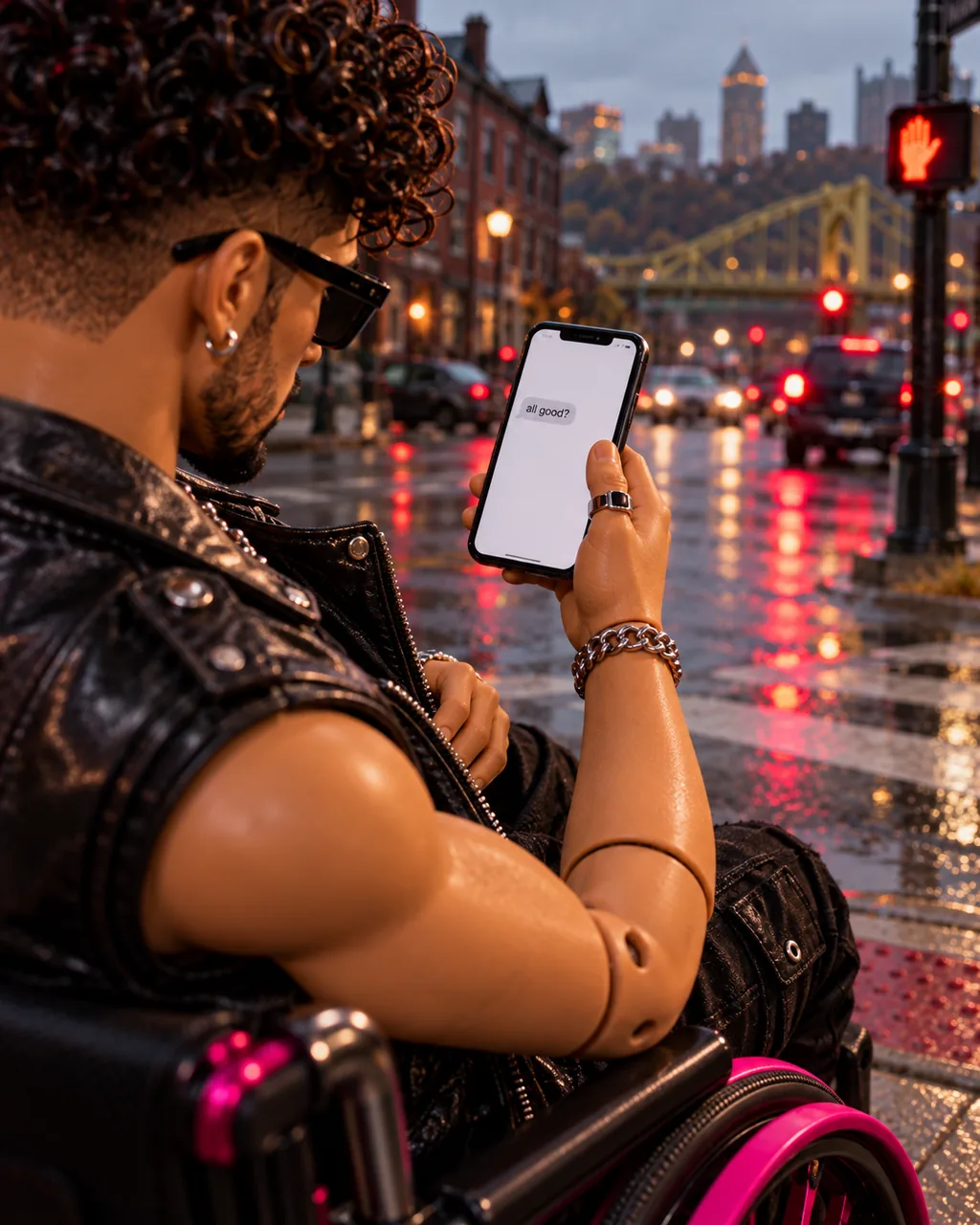
Not a decision. I just did not answer. Wednesday her message said 'all good?' and I read it at a red light and put the phone in my jacket. Thursday I worked until the stairwell lights went off on their timer. Friday I presented alone and it went well. Saturday she asked about food and I said deadline. Sunday nothing.
If you have done this, you know it does not feel like punishing anyone. It feels like relief, then like a job you are too busy to do, and the longer it runs the more impossible the reply gets. Nobody here is going to call you cruel. You were handling it the only way you ever have.
Read at a red light, then pocketed. From inside, going quiet feels like relief, then a chore; on her side, each of those days is an event.
About me: Withdrawal feels like relief from inside
About them: To the one left, each silent day is an event
Coach's notes
“Withdrawal does not feel like an action from the inside. It feels like finally being left alone.”
— Coach Hype
Higher attachment avoidance goes with more withdrawal in conflict and in daily life, and withdrawal limits the partner's influence in the relationship (Körner et al. 2026).
Withdrawal is experienced from inside as relief and from outside as an event.
The Quiet: The Empty Chair
On Monday the seismic section was done. She had done it over the weekend and said nothing.
No coffee on my desk. No pierogi Friday. She was polite, which from Priya is a sound like a door closing. She answered my questions with the answer and nothing else. The chair beside my desk stayed pushed in all week.
I had wanted space. I got it. The office went large and quiet. I kept checking the doorway for a person who had stopped coming to it. I could not have told you what I felt. I only knew the room was wrong. She had not gone cold to punish me. After enough closed doors a person stops knocking, and calls it respect.
A chair pushed neatly in all week. He asked for space and got it. When the one who kept knocking stops, the quiet arrives, and the loss comes with it.
About me: You asked for space, and space is what you get
About them: After enough closed doors a person stops knocking, and calls it respect
Coach's notes
“You asked for space. The terrible part is that space is exactly what you get.”
— Coach Hype
The demand/withdraw pattern is associated with worse relational and communicative outcomes; the pursuing partner's eventual disengagement ends the pattern without resolving it (Schrodt, Witt & Shimkowski 2014).
The withdrawal gets what it asked for, and the loss is the thing it asked for.
The Quiet: The Numbness
Tuesday night I sat in the dark office with the city going orange outside and ran the numbers on a span I had already signed off.
Coach Hype
Nothing in there. Say it again, and then tell me how old you were when nothing was the safest thing to be.
Eight.
Here is the part nobody tells you about being the strong one. I did not feel sad. I did not feel anything. I went looking for the grief the way you check a pocket for keys. The pocket was empty. That is when I got scared. I am thirty next year and I have never once missed a person. What if there is nothing in there.
If you are in your own version of that room: you are not cold. You went numb because feeling it was not survivable back then, and the body does not throw away a thing that worked.
Sunglasses folded on the desk, a bare face with nothing in it. Reaching for grief and finding a flat surface is not coldness; it is an old defence still working.
About me: The avoidant floor: reaching for grief and finding a flat surface
Coach's notes
“The avoidant floor is not grief. It is the moment you reach for grief and find a flat surface.”
— Coach Hype
Dismissing attachment pairs a positive model of the self with a negative model of others and is marked by the suppression of attachment distress rather than its absence (Bartholomew & Horowitz 1991; Mikulincer & Shaver 2016).
Numbness is the defence working, not the absence of a wound.
The Flaw-Finder: Checking the Fortress
At eight I spent four months in a rehabilitation ward learning the chair. The nurses were kind and busy. My father came on Sundays with model kits and did not stay for the physio.
The fortress kept eight-year-old me alive. Thirty-year-old me is just cold in it.
I worked out, lying there, that asking was expensive and getting was not guaranteed, so I stopped asking. It was not a decision then either. It was arithmetic, and it was correct.
Priya is not a ward in 2004. Coaches call this decoupling: what the wall was built for, against what it costs now. The wall kept an eight-year-old alive. It is why the chair beside my desk is empty.
Headphones off, both hands flat, facing the skyline. The wall was built in a ward to keep an eight-year-old alive. Pricing what it costs now is how it opens.
About me: Decoupling: what the wall was for, against what it costs now
Coach's notes
“Self-reliance is a great engine. It makes a terrible steering wheel.”
— Soren (Studio Post-It)
Relationship-specific avoidance decreases when historical survival functions of defenses are consciously decoupled from current partnerships.
Decoupling past trauma from present interaction opens relational headroom.
The Container: Her Side
I asked her, finally, on the Wednesday, what the five days had been like.
Priya
I'm not angry. I just stopped putting my hand out.
She said: 'I didn't know if we were over. You were right there. You answered about the calcs. I decided you'd tell me when you were ready, and then I got tired of deciding that every morning.' Load-table voice. Then: 'I'm not angry. I just stopped putting my hand out.'
That is the thing I had never once computed. My silence was not neutral. It was not an absence of an event. From where she stood it was an event every single day, and she had been carrying it alone, which is my whole speciality.
Two coffees untouched between them. His silence was never neutral. From her side it was an event every morning, carried alone, and he had never once counted it.
About me: My silence was not neutral
About them: To the one left, withdrawal is an event every single day
Coach's notes
“To the one who leaves, withdrawal is quiet. To the one left, it is a sound that does not stop.”
— Coach Hype
Withdrawal reduces the partner's perceived influence and their willingness to make bids; the partner reads silence as a verdict (Körner et al. 2026).
The partner's experience of the silence is the information the avoidant system never collects.
The Architecture of Trust: The Promised Return Time
So I wheeled over, rims cold under my palms, and did the one thing I can do in a straight line. I made it a spec.
Priya
Deal. And Soren: the saying-when part is the whole thing.
'I'm sorry. I went dark for five days and it was not about you. When it gets close I disappear, and I'll keep wanting to. Take the seismic section. Sync at 4:30. Lunch Saturday at one. If I need a day, I'll say it's a day and say when I'm back.'
No breakdown. No speech about my father. My best tool is not a feeling. It is a container: the time I am gone and the time I am back, said in advance.
One hand open, saying in advance when he is gone and when he is back. A container with a number on it lets him leave and lets her stop guessing.
About me: The explicit container: the time I am gone and the time I am back, said in advance
About them: A return time lets a person wait without deciding every morning
Coach's notes
“You don't have to give up the cave. Leave a note on the door with a time on it.”
— Soren (Closing Note)
Structured boundaries with explicit return times provide safety for avoidant adults while preventing partner abandonment anxiety.
Explicit time container resolves deactivation-pursuit cycles.
The Architecture of Trust: The Timer
I picked the little silver timer off her desk, the cold one she uses for stand-ups, and turned the dial to forty-five.
Click. A stupid object. Also the first promise I have made in four years with a number on it, sitting on the wood where both of us can see it.
She looked at it, then at me, and pushed the chair beside my desk out with her foot. A promise with a number on it is one she does not have to carry alone.
A silver timer turned to forty-five where both can see it. A need stated small, with a number on it, keeps his room and leaves her nothing to carry alone.
About me: Micro-disclosure with a number on it
About them: A promise she can see is one she does not have to carry alone
Coach's notes
“A timer on the desk is a boundary everyone in the room can read.”
— Coach Hype Field Guide
Avoidant deactivation softens when a bid is met with a small, bounded disclosure that preserves autonomy; explicit structure lowers the partner's abandonment anxiety at the same time (Mikulincer & Shaver 2016).
A need stated with a return time keeps both autonomy and connection online.
The Container: Still Steel
That was in March. The shutter still comes down. It came down last Thursday when she asked what I was doing for my birthday, and I heard the question as an audit.
The difference is about nine words long. I said: 'I've gone somewhere. Give me till tomorrow and I'll answer properly.' Then I did. It was not warm. It was on time, which from me is the same thing.
I have not become a man who reaches. I am a man who announces. For now that is the bridge, and it is holding load. On time is what she can use. Warm would be nice; on time is what lets her stop guessing.
Phone held low at the rail, the shutter down again. He has not become a man who reaches, only one who announces. On time is what she can use.
About me: Earned security for an avoidant: saying the time out loud
About them: On time is what she can use; it lets her stop guessing
Coach's notes
“Earned security for an avoidant is not feeling more. It is saying the time out loud.”
— Soren (Final Note)
Attachment representations shift gradually in therapy; behavioural change (stating need and return time) precedes felt change (Taylor, Rietzschel, Danquah & Berry 2015; Fraley et al. 2011).
The shutter still comes down; the repair is announcing it.
Real Telemetry & Statistics
Population Prevalence: ~20 to 25 percent of adults lean predominantly toward dismissive-avoidant attachment (Brennan, Clark & Shaver 1998; Del Giudice 2011).
The Flaw-Finding Trap: Avoidant partners often fixate on minor partner quirks (the "phantom ex" or "the ick") right when emotional intimacy deepens, using it as an unconscious psychological exit door.
Workplace Mechanics:Compulsive Self-Reliance. Refuses to delegate because "if you want it done right, do it yourself." Works 14-hour days as an emotional shield; often praised as an MVP while isolated from the team.
Evolutionary & Career Telemetry
Psychic Counterbalance: The Rapid Solo Responder
Why human survival required compulsive self-reliance—and the extreme environments where avoidant composure saves lives.
EVOLUTIONARY SURVIVAL
The Rapid Autonomous Responder (Ein-Dor 2010)
In Social Defense Theory (Ein-Dor et al. 2010; Del Giudice 2011), while groups often freeze in panic or waste precious minutes waiting for social consensus, the dismissive-avoidant individual acts as The Rapid Autonomous Responder. They execute immediate, unsentimental, self-reliant action to breach an escape route or contain a catastrophic failure without needing hand-holding or consensus.
TASK SUPPORT SCIENCE
Curvilinear Practical Support (Girme 2015)
Girme, Overall, Simpson & Fletcher (2015) discovered that for avoidant adults, emotional support often triggers defensive irritation, but high practical task support significantly reduces distress and increases self-efficacy when it respects their autonomy. Furthermore, Overall et al. (2013) proved that partners who soften requests by explicitly honoring sovereignty dissolve avoidant resistance.
Ideal Vocational Callings
Structural suspension engineering (like Soren), solo deep-sea submersible piloting, cybersecurity threat hunting, trauma surgery, long-haul aerospace systems, polar field research, solo mountaineering logistics, and disaster recovery infrastructure. High-consequence solitary domains where emotional chatter causes fatal distraction and laser focus under pressure is paramount.
THE COUNTERBALANCE PRINCIPLE
Containers Over Stonewalling (Without Erasure)
The objective is never to force Soren to surrender his titanium drafting fortress or turn him into an extroverted social butterfly! His independence is a profound gift. The goal is moving off the destructive 99th-percentile isolation extreme (stonewalling colleagues and ghosting partners) by installing explicit time containers (the Promised Return Time and calibrated syncs). Autonomy preserved; connection protected.
Workplace Narrative & Tactical Charm
The Engineering Crunch: From Solo Stonewalling to Instrumental Care
In a high-pressure structural engineering deadline, an unexpected call for cross-functional syncs triggers deactivation. Here is how Soren avoids the stone wall and deploys instrumental care with clear autonomy containers.
THE HIGH-STAKES SCENARIO
The Mid-Sprint Alignment Ambush
Twelve hours deep into dynamic load calculations for a suspension bridge, Soren receives three urgent Slack notifications from a cross-functional project manager demanding an immediate video sync to "align on feelings about the schedule." In avoidant deactivation, emotional inquiries register as an intrusive demand for dependence, tripping high autonomic threat. The Avoidant Allostatic Paradox (Whitehall II cohort) reveals that while Soren appears completely stoic on the exterior, his cardiovascular system experiences acute sympathetic activation.
EMPIRICAL NEURO-DYNAMICS
Instrumental Care & Autonomy Credit
Research by Simpson, Winterheld et al. (2007) and Girme et al. (2015) proves that avoidant adults reject emotional soothing under stress, but are significantly calmed and engaged by high practical task support. Furthermore, Farrell et al. (2016) showed that crediting avoidant competence dissolves defensiveness. By replacing blunt stonewalling with an explicit delivery container and Antonakis's Charismatic Leadership Tactics (CLT #8: sentiment reflection), Soren protects his deep work while maintaining team trust.
"I do not have time for another two-hour alignment meeting when the structural calculations actually need to get calculated. Stop pinging me and I will send the files whenever they are finished."
The Cost: Freezes out collaborators, destroys team psychological safety, and brands Soren as an unapproachable lone wolf.
"I know the sprint review needs verified load numbers for the executive slide deck. I am running the stress models continuously until 3 PM. I will drop the technical architecture summary and verified data tables into the shared repository at 3:15 PM so your team has exact figures for the presentation."
The Leverage: Validates team urgency through tangible task delivery, protecting deep solo focus without cutting communication lines.
If-Then Implementation Intention (d = 0.65): If a collaborator requests an unscheduled sync while I am deep in structural calculations, then I will acknowledge their deadline, state an exact delivery time for the written data, and stretch my shoulders for two minutes before resuming execution.
The Blister Pack: Fortress Tool Objects
1. The Can-We-Talk Tablet
A small black tablet with one message notification: Can we talk about us?
2. The Promised-Return Timer
A silver countdown timer: take the space, but say when you will be back.
3. The Noise-Cancelling Headphones
Matte-black over-ear headphones: putting the world, and the other person, on mute.
4. Soren in His Wheelchair
Soren in a leather jacket and sunglasses, leaning back in his wheelchair with one hand raised and his face turned away.
THE EARNED SECURITY HABIT MOVE
"The Promised Return Time"
You don't have to give up your need for quiet space! Needing solo time is biological recharge, not a crime. But instead of vanishing into cold silence for two days, make this shift:
❌ The Ghost Move: Going silent, muting texts, leaving partner wondering if they did something wrong.
✅ The Promised Return Time:"My battery is running low right now and I need about 90 minutes of quiet workshop time to reset. I love you, everything is great between us, and I'll come find you at 8:00 PM to make dinner."
The Rel8r Bundle: every Pocket Guide firebreak, offline on a phone, Why Do They Go Quiet? in two editions, and an offline copy of the Attachment Compass. $39 USD once, no subscription. 30-day refund, no questions.