
Why Your Brain Treats A Late Text Like A Saber-Toothed Tiger.
Long before smartphones, group chats, or read receipts, humans had a secret survival app running in the background. Here is the true story of how two brilliant scientists figured out why connection is biological oxygen.
The Mandatory Reality Check
Attachment styles are continuous nervous system states, survival dials, and communication habits—not permanent personality flaws, lifelong diagnostic labels, or medical disorders. Everything here is strictly non-pathologizing.
- The Invariant
- Your nervous system developed these survival dials as brilliant evolutionary adaptations to keep you connected. They are continuous gauges you can learn to read and tune, not broken machinery.

Caloric Hygiene vs. Biological Oxygen
Back in the 1940s and 1950s, hospital doctors believed something strange. They called it "Caloric Hygiene."
The medical belief back then was that babies were basically tiny machines: give them sterile milk (calories), put clean diapers on them (hygiene), keep germs away, and leave them alone in a quiet crib so they don't get "spoiled." If a baby cried, the official advice to mothers was: "Never pick them up, or you will ruin their discipline!"
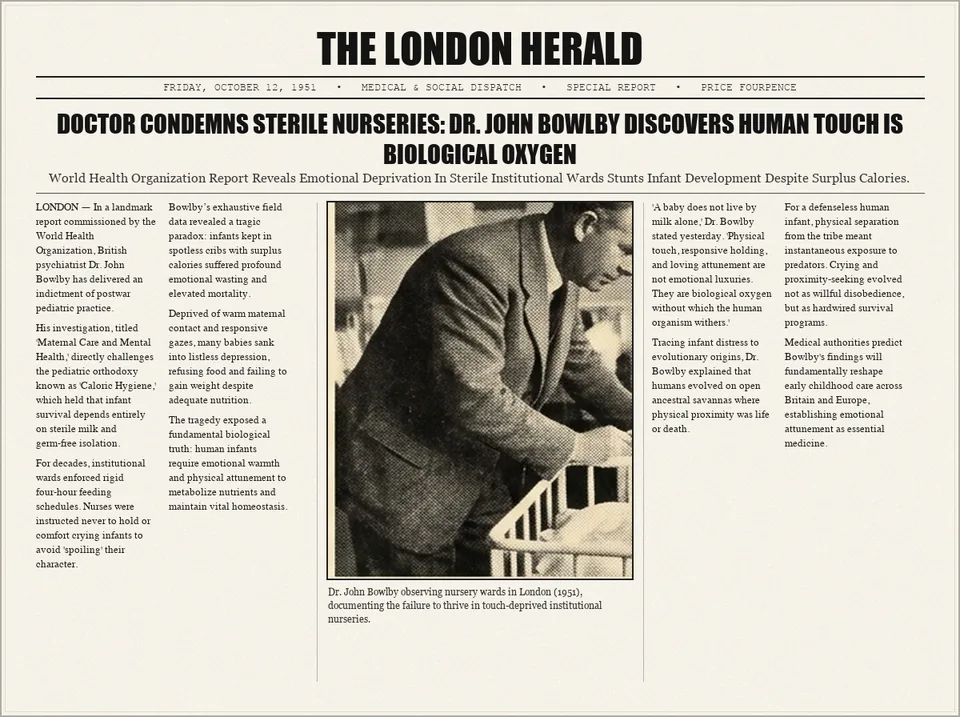
Then came British doctor John Bowlby. Visiting post-WWII European orphanages and pediatric wards, Bowlby noticed something heartbreaking: babies with sterile milk and clean blankets were literally withering away. Some stopped smiling; some gave up on interacting with humans altogether.
"Human touch, eye contact, and emotional responsiveness are not luxury desserts. They are biological oxygen."
Humans did not evolve in sterile nurseries with central heating. We evolved on open savannas surrounded by predators. For a human infant, physical separation from the tribe meant one thing: you were leopard lunch in four minutes flat. Your brain didn't invent attachment because it was sentimental; it invented attachment because staying connected equals staying alive.
Mary Ainsworth & The Strange Situation
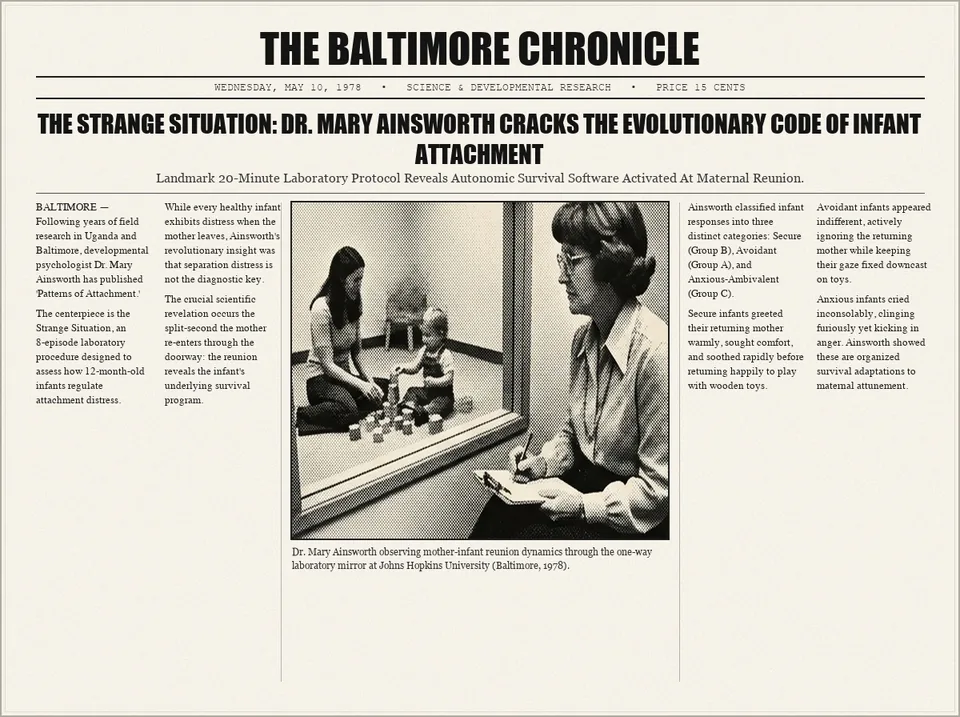
In the 1970s, an extraordinary developmental psychologist named Mary Ainsworth wanted to see this survival software in action. She designed a simple, 20-minute laboratory test called The Strange Situation.
The experiment was simple:
- A mother and her 12-month-old toddler play together in a colorful room filled with toys.
- A friendly stranger enters and talks with the mother.
- The mother quietly leaves the room for three minutes, leaving the toddler with the stranger.
- The mother returns through the door.
Here is the plot twist: every single baby cried or looked upset when the mother walked out. That is completely normal! The real scientific breakthrough was not how the babies acted when Mom left—it was what happened the exact split-second Mom walked back in.
The Four Reunion Reactions
When Mom returned through the laboratory door, four distinct autonomic survival programs revealed themselves in the infants' nervous systems.
The Secure Reset Button
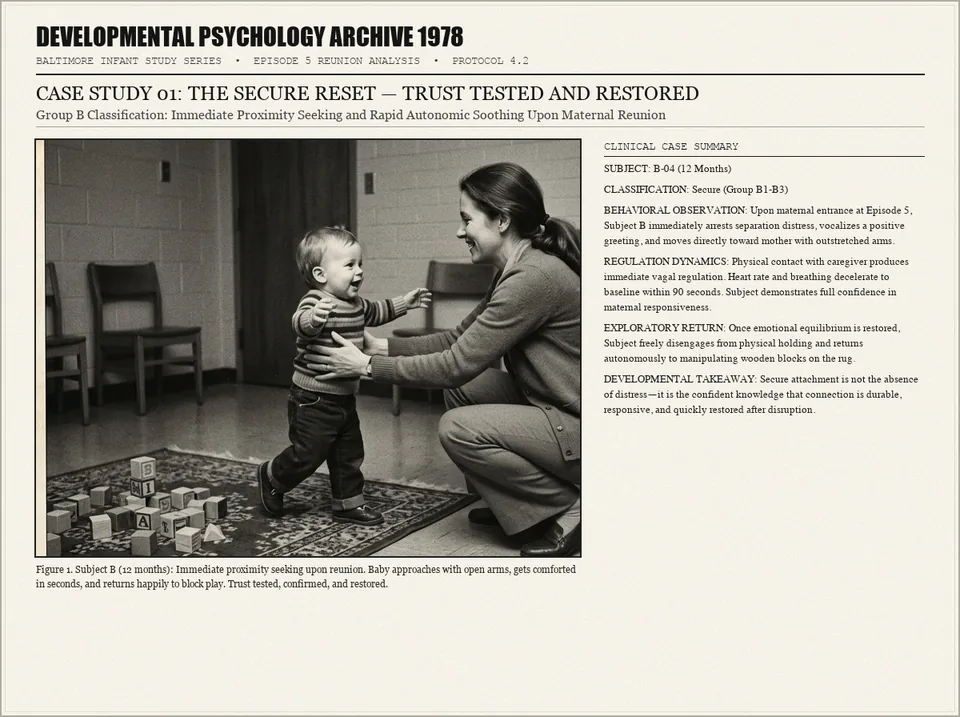
The baby cries, runs straight to Mom's legs, gets lifted into her arms, takes a deep breath, and within two minutes is back on the rug happily stacking wooden blocks. Trust was tested, confirmed, and restored.
The Anxious High-Alert Siren
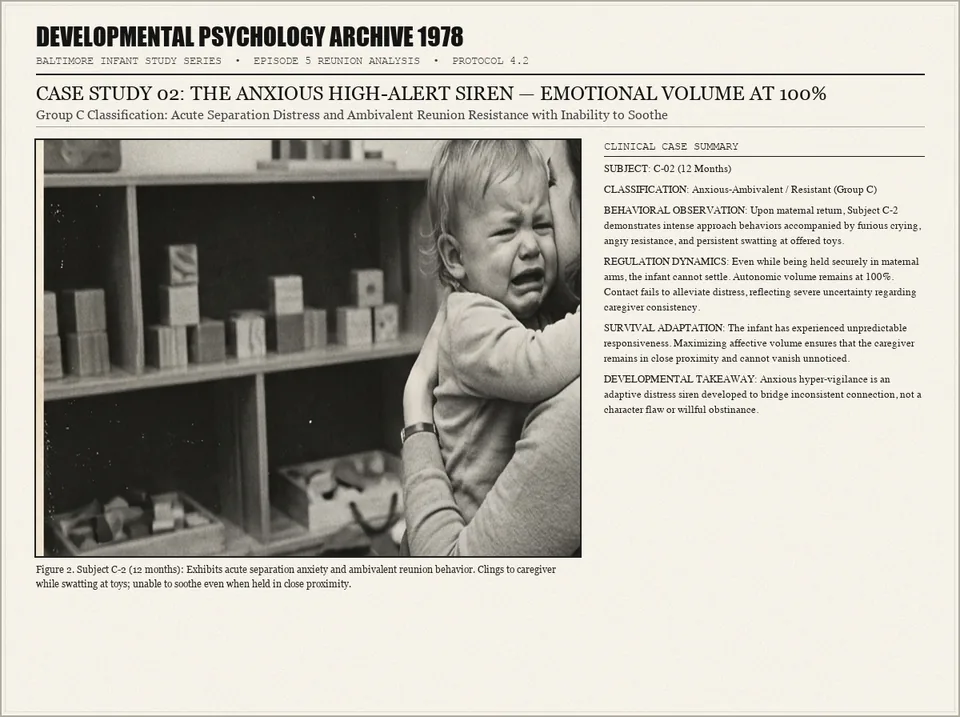
The baby runs to Mom, but clings furiously. They scream, cry, and even swat at toys in frustration. Even while being held, they cannot calm down. They learned that comfort is unpredictable, so they turn their emotional volume to 100% to make sure Mom never vanishes again.
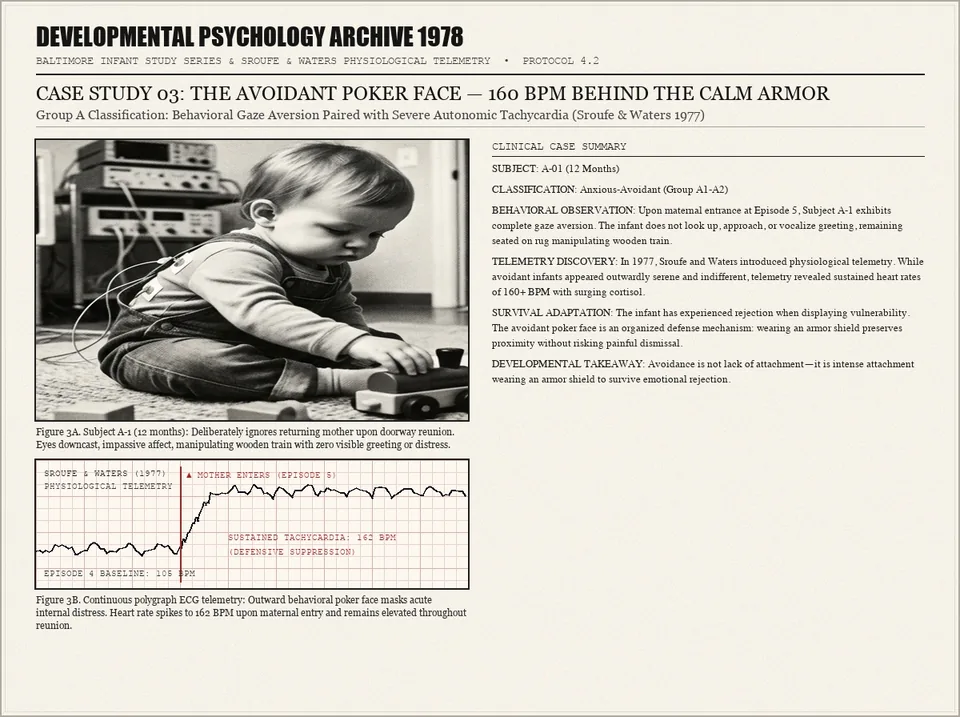
The Avoidant Poker Face
Mom walks back in. The baby doesn't look up. They keep playing with a toy train, completely calm... or so it seemed! When researchers hooked them up to biometric heart monitors, their pulses were racing at 160+ beats per minute with cortisol spiking! They felt terrified, but had learned: "Showing my pain gets me ignored, so I will wear an armor shield."
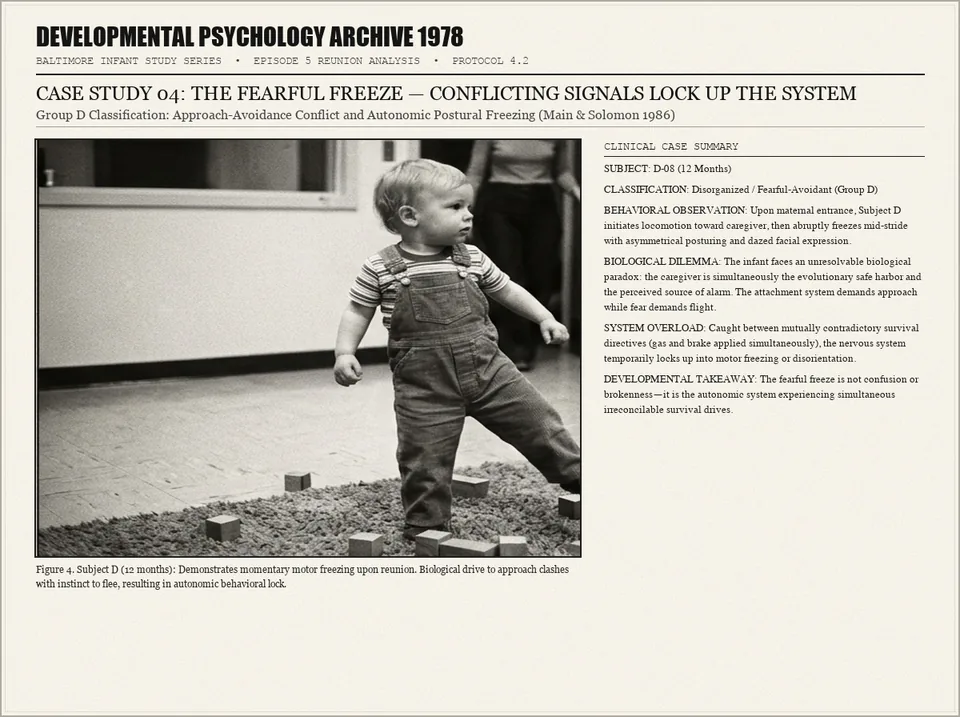
The Fearful Freeze
The baby takes two steps toward Mom, then suddenly freezes mid-stride, turns their head away, or curls into a ball. The safe harbor and the source of alarm are the exact same person. The system gets conflicting signals and locks up.
Act III: The Smartphone Epiphany
Fast forward twenty years. Those babies grew up, moved into apartments, and got smartphones. When someone you care about leaves your text on "Read" for four hours, or when your date says "Can we talk tomorrow?", your adult logical brain isn't driving the car. Your 12-month-old Strange Situation survival app boots right up!
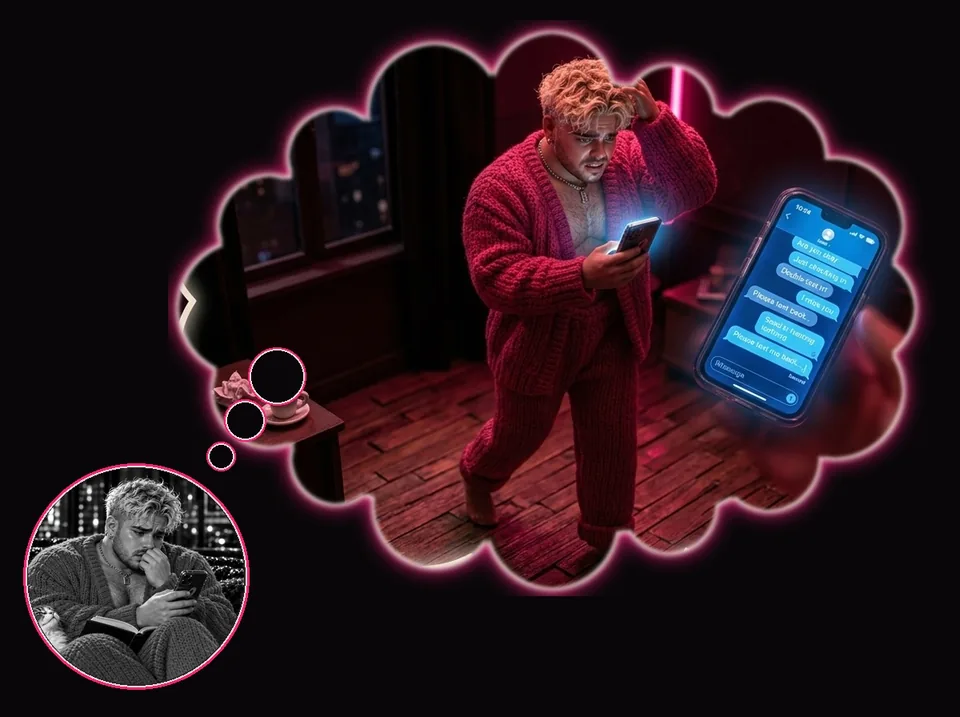
Sound The Alarm: Double-Texting & Pacing
If you lean Anxious, you want to sound the siren: double-texting, pacing the floor at 2 AM in your pajamas, demanding proof of love. The unread text feels like mortal danger, so your system screams at full volume to bridge the silence.
Explore Anxious Style →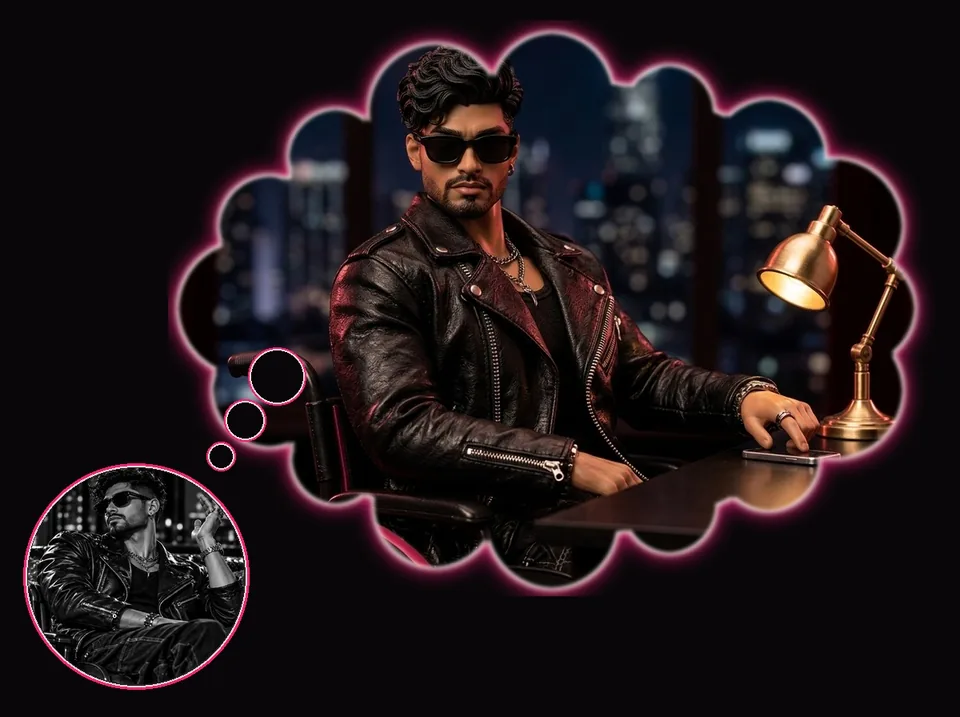
The Poker Face: Muting & Working Late
If you lean Avoidant, you want to put on the armor: muting your phone, flipping it screen-down on the desk, working late into the night, and pretending you never cared anyway. Outwardly self-contained and icy, even while the internal pulse races.
Explore Avoidant Style →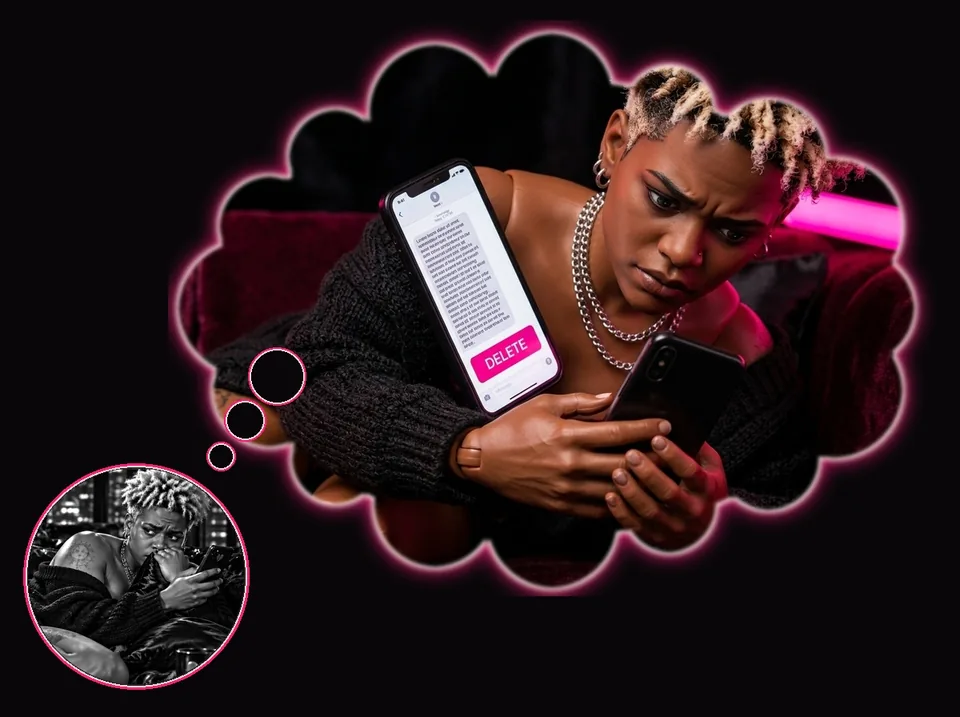
Gas & Brake: The Frozen Delete Button
If you lean Fearful, you want to hit the gas and the brake at the exact same time: pouring your vulnerable heart into a text message, and instantly freezing with terror over the delete button. Desperately craving closeness while dreading rejection.
Explore Fearful Style →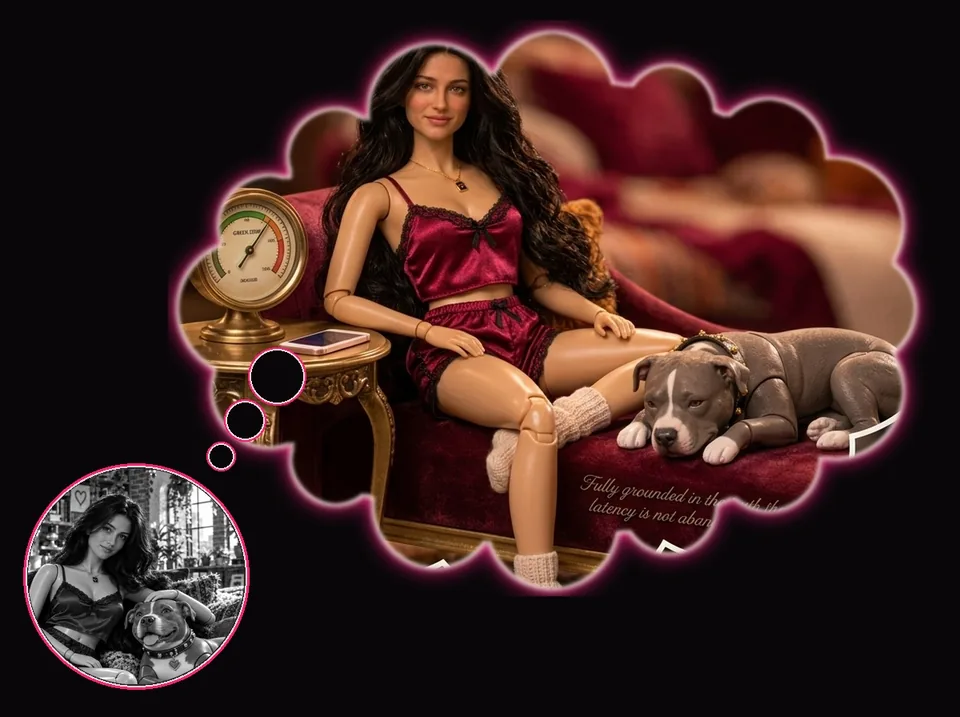
Sovereign Calm: Latency Is Not Abandonment
If you have Earned Security, you look at your dashboard dials, take a deep grounding breath, and let the phone rest peacefully on the table. You remember that latency is not abandonment—healthy connection comfortably breathes across space.
Explore Secure Style →Where To Go From Here
Explore the deep dives for each attachment pattern, complete with sequential graphic novel arcs, vocational telemetry, and superhero tools: