Secure attachment is not a state of perfection or moral superiority—it simply means your nervous system can handle closeness without losing yourself, and handle space without spiraling into panic.
THE CORE PHILOSOPHY
"I can be close to you and still be 100% me."
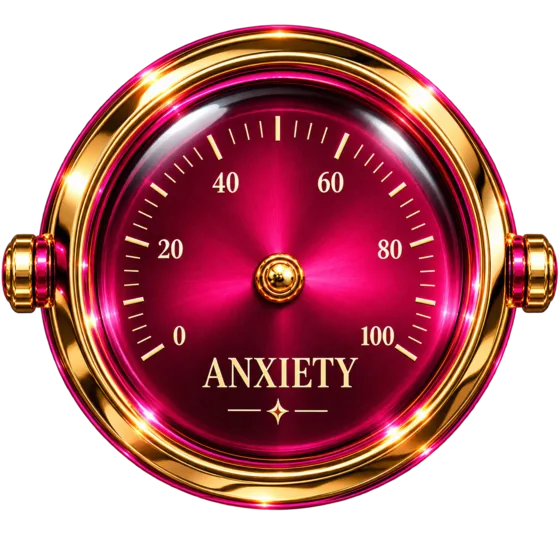
When both dials are resting in the green, your brain operates on a simple, sturdy working model: "I am worthy of care, and people are mostly trustworthy."
A partner isn't a threat to be managed or an escape hatch to be monitored. They are a secure base to explore the world from, and a safe harbor to return to when storms hit.
The Secret
Secure people still feel hurt, angry, and scared. The difference is their repair reflex: they reach out to fix ruptures within hours instead of holding grudges for weeks.
The Graphic Novel Episode
The Cold Nursery: The Solitary Safe Haven
My parents wanted a boy. They gave their blonde daughter a boy's name to prove it, and then they ran an immaculate house around her.
Don't worry, bear. As long as you're here, nobody can hurt us.
Tears were treated like spilled milk. Wiped up, not mentioned. When school got cruel or the flat got cold I took Barnaby Bear into the corner of the parquet. I pressed my face into his fur until the rain was the only thing I could hear.
He never left the room. That is the whole qualification. Researchers call a house like that a cold start: need met with silence, so the child learns to do it herself. By eight I was excellent at it.
Face pressed into a bear's fur: when nobody comes, a child finds something that stays and does the soothing herself. By eight she was expert.
About me: The cold start: need met with silence
Coach's notes
“Rule #1 of my childhood: when nobody comes, you promote a stuffed bear to Chief of Security.”
— Aleksandr (looking back at 28)
Early insecure attachment histories do not preclude adult security when narrative coherence and internal soothing scripts are developed.
Absence of parental safe haven generates compensatory object attachment.
The Cold Nursery: The Year I Went Cold
I was twenty-four and there was a man called Tomas who was kind in a way I could not metabolise.
Coach Hype
You went cold on someone kind. Stay there a moment. What did the warmth feel like in your chest?
Like a bill arriving.
Coach Hype
And to Tomas, four days of nothing was not space. It was a verdict he had to guess at, every morning.
He asked what I was thinking. He left a toothbrush at mine. One Sunday he said 'I love you' at the counter and the floor of my chest closed like a shop shutter. I said thank you. For three weeks I was busy, then very busy, then four days late answering, and then he stopped sending them.
I told everyone I needed space. What I did was go cold at a person who had done nothing, because being loved out loud felt like an invoice. If you have done that: you were not a monster. You were seven in a flat where nobody came.
A spare toothbrush in a glass by the sink. To a child nobody came for, love said out loud arrives like a bill, and going quiet feels like safety.
About me: Being loved out loud felt like an invoice
About them: To Tomas, four days of nothing was not space; it was a verdict he had to guess at
Coach's notes
“The cold start does not make a secure adult. It makes a person who leaves first and calls it independence.”
— Coach Hype
A history of unresponsive caregiving commonly produces a dismissing or fearful adult pattern: closeness is experienced as demand and distance as safety (Bartholomew & Horowitz 1991; Mikulincer & Shaver 2016).
Earned security is preceded by the insecure adult behaviour, not by its absence.
The Nightmare: The Balcony Perch
The dream came back for years. Always the same storm.
I am on the wet stone parapet of a tower, forty storeys up, in a magenta gown the wind is trying to take. The bear is in my right hand, held out over the drop. The wool is soaked. My fingers are shaking.
The belief underneath it never changed: my safety is in that one fragile thing, and I am about to lose it. Psychologists call it somatic memory. The body keeps the alarm long after the mind has moved out of the flat.
A soaked bear held out over forty storeys. The body keeps an alarm long after the mind has left the flat, and it rings loudest for the one thing.
About me: Somatic memory: the body keeps the alarm
Coach's notes
“The brain stores old trauma in 4K with surround sound and plays it at 3 AM.”
— Aleksandr's Journal
Somatic memory preserves early vulnerability cues until conscious cognitive reappraisal updates the internal working model.
His paws are on the wet stone and then they are not. The wool is soaked through and too heavy, my fingers are shaking, and the thing I have organised my life around holding is going over the edge in the rain.
Every version of me since I was seven has been a system for not dropping that bear.
Paws on wet stone, then not. When the thing you built your whole life around holding goes over, the only safety left is the one inside you.
About me: The grip: a whole life organised around not dropping one thing
Coach's notes
“Total panic: the training wheels coming off a cliff.”
— Dr. Adair Jenkins (Case Notes)
Attachment defenses are continuous adaptive responses rather than categorical defects; defense collapse triggers re-regulation.
Transitional object release forces internal locus of safety.
The Nightmare: The Free Fall
Then he is gone, turning over and over in the dark with the whole city lit underneath him.
Forty storeys of neon and headlights and wet asphalt, and one small pink shape falling through it with his arms out and his face wide open. Ten seconds. I stand on the parapet and watch the only thing that ever listened to me get smaller.
This is the part the dream kept coming back for. Not the ledge. The ten seconds after it, where the protector is destroyed and I am still up here, and nothing has caught him and nothing has caught me.
Arms out, face open, ten seconds of falling. When the protector is gone and nothing has caught you, whatever steadies you next has to come from inside.
About me: The collapse of the old defence
Coach's notes
“Everything you built your safety on, falling, in high definition, at 3 AM.”
— Coach Hype
Attachment defences are continuous adaptive responses rather than categorical defects; when a defence collapses the system is forced to re-regulate from within (Fraley, Hudson, Heffernan & Segal 2015).
The transitional object is lost and the locus of safety has nowhere to go but inward.
Awakening Whole
He hit the pavement with a distant, hollow splash and I came up out of the bed with my hands on my own ribs, gasping.
I survived the fall. The bear was never the protector. I was.
The room was warm. Sun through the sheer curtains. I waited for the collapse, the one from the parquet floor, and it did not arrive. My heart slowed. My chest opened. I looked down at my two hands.
The bear was gone and I was still here. The soother had never been the pink cotton or the gold bow. It was this nervous system, which somebody had finally taught me how to run.
One hand flat on her own chest, the bear gone, the collapse not arriving. The soother was never the toy. It was a body somebody finally taught her to run.
About me: The internal safe haven: the soother was the nervous system
Coach's notes
“Clinicians call it narrative coherence. The rest of us call it waking up and finding the monster works for you.”
— Coach Hype
Adults with earned security exhibit high narrative coherence and internal emotional resolution despite difficult early parenting.
Somatic realization of survival shifts locus of control from external objects to self.
The Awakening: The Case Notes
That did not come from nowhere. Three years before it, in a small office with a ticking radiator, I told the whole thing out loud with my hands cold in my lap.
Dr. Adair Jenkins
Tell me about the bear.
He was the only one who stayed. I think I needed to say that to someone who also stayed.
The boy's name. The spilled-milk rule. Tomas and the shutter. Dr. Jenkins did not fix anything. She made me tell it in order, throat tight, week after week, until the story stopped being a wound and became a map.
Forty Tuesdays and a box of tissues. That is what earned means. Not a personality I was issued, and not a weekend. A hard start, told whole, enough times that my body stopped bracing.
A box of tissues and forty Tuesdays. A hard start told in order, enough times, stops being a wound and becomes a map the body can read without bracing.
About me: Earned security: a hard story told whole, until the body stops bracing
Coach's notes
“Earned security has a receipt. Mine is forty Tuesdays.”
— Aleksandr
Earned security: adults with difficult early attachment histories who have developed coherent, integrated accounts of them function securely in adult relationships; coherence of the account, not the absence of adversity, is the criterion (Pearson, Cohn, Cowan & Cowan 1994).
A hard history told whole, in order, without flooding or going blank, consolidates security.
The Leap of Agency
After that I stopped moving through my life on tiptoe.
In the dream I am on the rail again in the magenta sequins, the wind cold on my arms, forty storeys of rain and neon below. My pulse stays level.
Researchers call it a secure base script: a story in the body that says if I go out there and it goes wrong, I know the way back. I stepped off the threshold like a person who has checked the rigging.
Off the rail at forty storeys, pulse level. A story lives in the body now: if this goes wrong, I know the way back. That is what lets you jump.
About me: The secure base script: if it goes wrong, I know the way back
Coach's notes
“When you know you can catch yourself, heights stop being danger and start being a runway.”
— Aleksandr (Voice Memo)
Secure base script provides the cognitive schema necessary for confident exploration and risk-taking.
I landed on the wet tarmac with the thud of a gymnast. One knee down, fingertips to the ground, water haloing out around me.
Heart rate steady. Breath rhythmic. Coaches call it grounding: when the bad thing lands in your life you do not run and you do not fold, you take the shock through your knees and stand back up.
One knee down on wet tarmac, breath steady. A steady body under impact is what stops a hard landing from turning into a fight or a fold.
About me: Grounding: take the shock through the knees and stand up
Coach's notes
“Landing rating: 10/10. No emotional whiplash detected.”
— Rel8r Compass Field Manual
Actor emotional stability buffers against relational conflict and prevents defensive escalations.
Down on the avenue the hot-pink Corvette was already idling, exhaust curling warm into the rain. Leo behind the wheel, sunglasses pushed up, tapping the leather.
Leo
Hop in, boss. Marcus has the dough rising and the terrace heater on.
Step on it. Let's see if this engine can match my pulse.
Leo is not a romance. He is an ally. Five years of producing campaigns together and arguing about architecture, and not one drop of drama.
That is what low anxiety and low avoidance buy you: no monitoring, no scorekeeping, no cold shoulder. A friend is simply a friend and the passenger door is simply open. Leo gets the same thing back: nobody reading his face for a motive, which is why he keeps showing up.
A passenger door that is simply open. With no watching and no scorekeeping, a friend is just a friend, and he gets the same back: nobody reading his face.
About me: Low anxiety, low avoidance: a friend is simply a friend
About them: Nobody reading his face for a motive lands on him as trust, which is why he keeps showing up
Coach's notes
“Insecure dating culture says men and women can't be friends. Earned security calls that unimaginative.”
— Leo (Co-Pilot)
Low avoidance and low anxiety enable differentiated friendships free from covert sexualization or possessiveness.
Platonic security demonstrated by transparent communication and boundary ease.
Open Horizons: Saying It Out Loud
We took the long curve along the water at forty-five, spray fanning off the back tires, and my phone buzzed. Marcus, running late at the studio.
For half a second the old flicker came up in my chest. I did not bury it and I did not chase it. I said it out loud: 'huh, I felt a little pang just then.' Leo grinned and turned the music down.
Psychologists call it affect labelling. Putting the feeling into words makes it smaller. Secure does not mean the feelings stop moving. It means you say them while they move. Said out loud, a pang is a thing a friend can turn the music down for. Hidden, it is a mood he has to guess at.
The phone buzzes and a pang comes up. Said out loud, a feeling gets smaller and a friend can turn the music down for it. Hidden, he has to guess.
About me: Affect labelling: a named feeling gets smaller
About them: A pang said out loud is a thing a friend can turn the music down for
Coach's notes
“A feeling you name gets smaller. A feeling you hide gets louder at 2 AM.”
— Rel8r Compass Field Manual
Putting a feeling into words lowers self-reported distress and amygdala response, even without trying to regulate it.
Name the flicker: don't bury it, don't chase it.
The Homecoming: The Safe Haven
We pulled into the circular driveway under the awning, cobbles wet and shining.
Marcus
Look at you two. Did you hit every puddle in Manhattan?
Every single one. And the bear didn't flinch once.
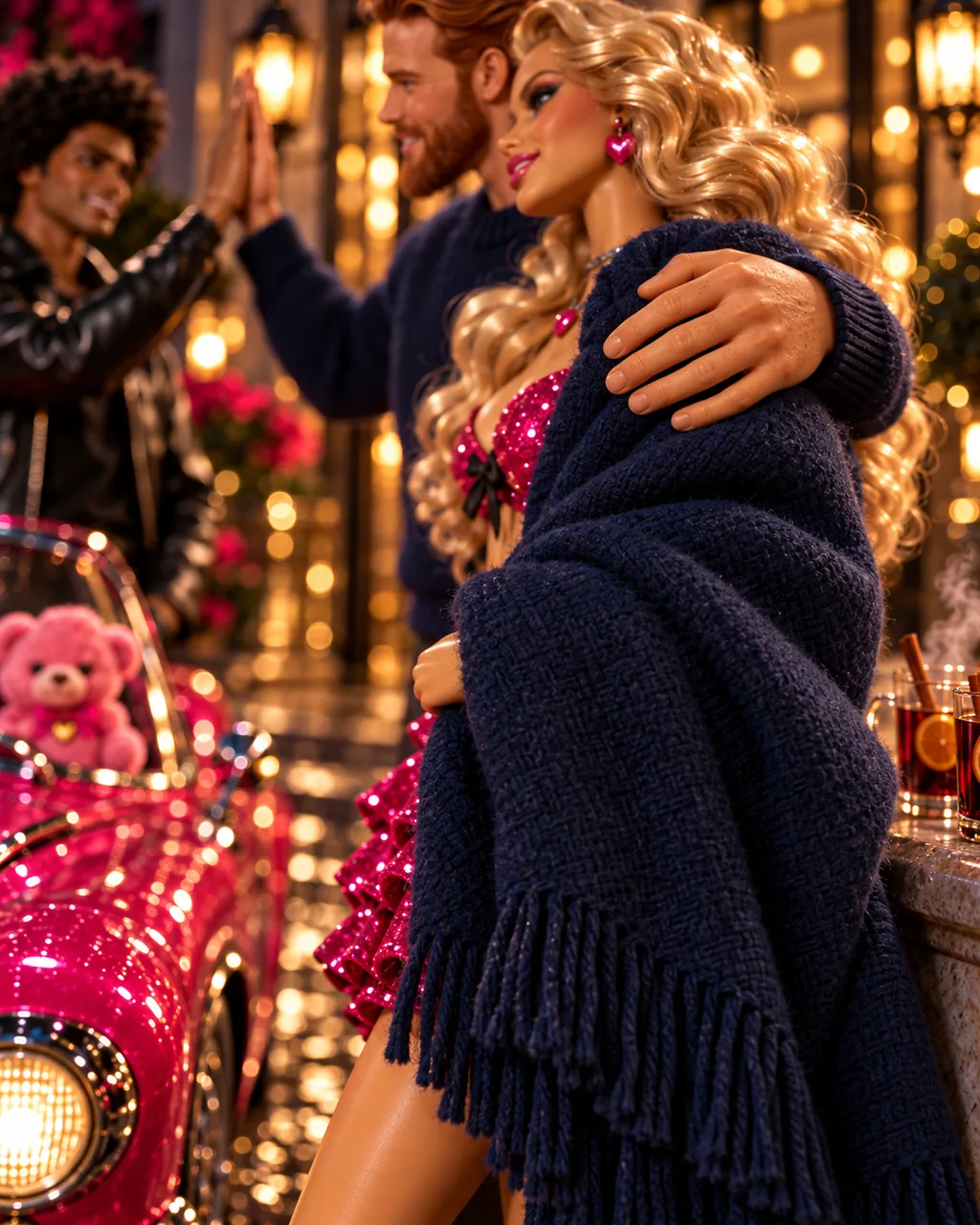
Marcus had come over and was already at the doors with two mugs of cider. He did not pace. He did not read my face for guilt. He did not give Leo the cold shoulder. He high-fived him, put the navy blanket round my shoulders and pulled me in.
Researchers call that a safe haven: a place where you are received, not inspected. It took me until twenty-eight to be able to stand inside one without flinching.
A navy blanket round the shoulders, a high-five for the friend, no face read for guilt. Being received instead of inspected is what lets a person walk in without bracing.
About me: The safe haven: received, not inspected
About them: Reception without monitoring is what lands on the person walking in
Coach's notes
“Real security doesn't puff its chest when another man drives his wife home. It offers him pizza.”
— Coach Hype
Relationship-specific security fosters reciprocal trust, eliminating partner-monitoring and possessive jealousy.
Three weeks ago Marcus was coming over, and he was four hours late and did not answer two messages.
Marcus
Thank you for telling me instead of going quiet.
The old thing came up the back of my neck like weather. He has changed his mind. You were too much. Go cold first, it is cleaner. I stood with my hands flat on the counter for twenty minutes. The honest version: three hours and a walk, not three seconds.
When he got there I told him. 'You were late, I got scared, the old story turned up, and I didn't want to go quiet on you.' He apologised and fixed his notifications. Earned does not mean the alarm is gone. It means I know whose voice it is before it makes my decisions.
Palms flat on the counter while the old story talks. Earned does not switch the alarm off; it means knowing whose voice it is before it decides for you.
About me: Earned does not mean the alarm is gone; it means I know whose voice it is
About them: The told fear lands as trust; the silence would have landed as a verdict
Coach's notes
“Earned security is not a finish line. It is a Tuesday you handle better than the last one, mostly.”
— Coach Hype
Earned-secure adults show secure functioning while retaining the physiological and cognitive traces of the early history; the vulnerability does not disappear (Pearson, Cohn, Cowan & Cowan 1994; Fraley et al. 2011).
The alarm keeps firing; what changes is who it gets to decide for.
The Homecoming: The Earned Tools
On the side table by the sofa, in the flat I share with Leo, are the four things that keep this running.
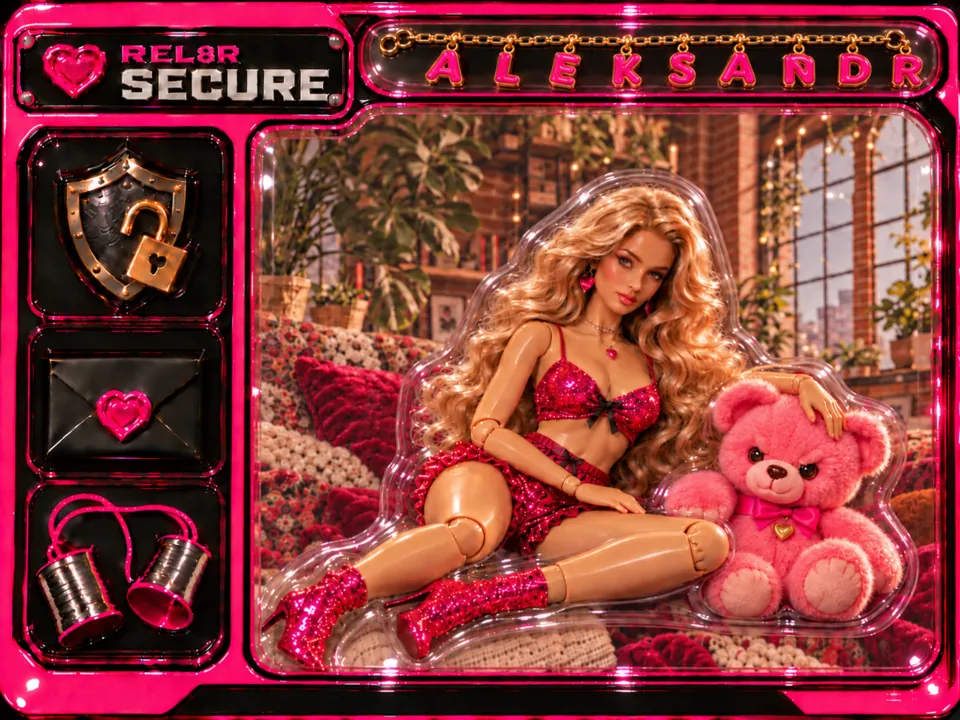
An open padlock on a shield. A letter with a heart seal. Two tin-can telephones on a string. Barnaby Bear, who sits in the open now instead of being needed.
They are not decoration. Psychologists call what they add up to a secure base: because I can steady myself, the room steadies, and people take bigger swings near me. You are not issued security at birth. You build it, one honest conversation at a time, and the parents who wanted a boy do not write the last chapter.
The key on its hook, the phones face up, the bear on the shelf. Steady herself, and the room steadies; people take bigger swings near her.
About me: The secure base: because I can steady myself, the room steadies
About them: People take bigger swings near someone who is steady
Coach's notes
“Secure isn't who you are. It's what you do when the room gets wobbly.”
— Aleksandr (Closing Note)
Secure functioning supports others' exploration: a person who can regulate themselves lowers arousal in those around them and raises their willingness to take risks (Kohlrieser, Goldsworthy & Coombe 2012; Fein et al. 2020).
Self-regulation becomes a resource other people borrow.
The Last Dream: The Reach
The dream came back last month, for the first time in two years, and it had been rewritten.
No parapet. I am down on the wet asphalt on one knee in the sequins, the whole street running with neon and nobody else on it. Barnaby is in the air above me, out of reach, going away from me fast.
And he has teeth. Little white ones, bared, in a face I have carried since I was seven. I had never once been on the other side of him. The thing you make into your protector is also the thing with the jaw.
Little white teeth in a face carried since seven, out of reach and going. The dream re-runs the old reach, and this time shows the protector's jaw too.
About me: The protector is also the thing with the jaw
Coach's notes
“Nothing you hand your safety to stays sweet forever. Eventually it turns around and shows you what it is.”
— Coach Hype
The secure base script is a stored expectation of what happens when distress arises: who is reached for, and whether reaching works (Waters & Waters 2006).
The dream re-runs the old script with the ending unlocked.
The Last Dream: The Unmaking
I reached for him and he did not land and he did not leave.
He came apart in the air. Fur into ribbon, ribbon into sequin, the whole shape of him unspooling into a spiral of pink that turned once around me and kept coming. It did not feel like losing anything. It felt like a thing being handed back.
Somewhere in there I started laughing, which is not what I do in this dream.
Fur into ribbon, ribbon into sequin, spiralling back toward her. Nothing is lost here. A job she gave a toy at seven is being handed back to its owner.
About me: It was never a bear; it was a job, and the job was mine
Coach's notes
“It was never a bear. It was a job, and the job was always mine.”
— Coach Hype
Earned security is marked by the integration of the early history into a coherent account rather than its disavowal (Pearson, Cohn, Cowan & Cowan 1994).
The function is assimilated, not discarded.
The Last Dream: The Gown
Then I was wearing him.
Every ribbon of him laid into a dress. The fur at the collar, the pink going all the way down, and the gold heart off his bow sitting over my sternum, where my own hand goes when I breathe.
Nobody handed me anything. The soothing was always mine; it had just been living outside my body in a toy with a crooked bow. In the dream I am standing in the middle of the street in it, and I am not holding anything, and my hands are free.
A gold heart over the sternum, where her own hand goes to breathe, and both hands empty. The soothing was always hers; it just lived outside her body a while.
About me: The soothing was always mine
Coach's notes
“You do not lose the bear. You stop needing to carry him, because you are wearing the thing he was for.”
— Coach Hype
In earned-secure adults the regulatory function once carried by external objects is represented internally and remains available under stress (Pearson et al. 1994).
The hands come free: soothing no longer has to be held.
The Last Dream: The Pelt
The last of it was the head, which I did not expect.
There you are. You were me the whole time.
It came up over my hair like a hood, ears and all, his face above mine. The two of us looked out of one body at the lit street. I walked up the middle of it wearing the whole of him, and my knees were steady.
The bear's face above hers like a hood. The protector is not returned or mourned; his job is hers now, and the street no longer reaches her the old way.
This is the end of the dream I have had since I was seven. Not the bear saved. Not the bear mourned. The bear worn. You do not get the protector back; you get to be him. The street is wet, the city is loud, and none of it reaches me the way it used to.
About me: You do not get the protector back; you get to be him
Coach's notes
“The oldest story there is: you meet the animal, and when it is over you are wearing it.”
— Coach Hype
Attachment representations are stable structures that are revised, not replaced; a revised model keeps the history and changes what it licenses (Fraley, Vicary, Brumbaugh & Roisman 2011; Pearson et al. 1994).
The protector is not returned or mourned; its function is now part of the self.
Real Telemetry & Statistics
Population Norms: ~50 to 55 percent of the general adult population operates with predominantly secure attachment (Brennan, Clark & Shaver 1998; Fraley 2011).
Repair Longevity: Secure couples have an over 80 percent success rate of accepting repair attempts within 24 hours of conflict (Gottman 1998).
Workplace Dynamics: High Psychological Safety. Secure individuals receive critical feedback without identity collapse, delegate tasks easily, and rarely burn out from over-functioning or hiding.
Organizational Telemetry
Equilibrium Attunement: Secure Base Leadership
In professional environments, earned security isn't just an emotional baseline—it is an unshakeable organizational anchor.
CARE TO DARE FRAMEWORK
The Dual Anchor (Kohlrieser 2012)
George Kohlrieser's leadership research demonstrates that Secure Base Leaders provide both a Safe Haven (psychological safety, non-blaming listening) and a Secure Base (challenging people to dare, innovate, and take bold risks). This dual posture down-regulates team autonomic alarm, elevates psychological safety, and reduces high-stress attrition.
EMPIRICAL META-ANALYSIS
N = 32,278 Workplace Validity (Warnock 2024)
A meta-analysis across 109 independent samples published in the Journal of Vocational Behavior found that adult attachment demonstrates significant incremental predictive validity beyond the Big Five personality traits for job performance, job satisfaction, and Leader-Member Exchange (LMX). Secure professionals communicate expectations directly, navigate critique without defensive collapse, and build cross-disciplinary bridges.
Best Vocational Environments & Callings
Executive leadership, trauma-informed mediation, cross-functional organizational orchestration, high-stakes crisis defusal, talent incubation, and mentorship. Because earned secure individuals have mastered internal self-soothing, they act as circuit breakers during corporate panic rather than conductors of collective hysteria.
THE EARNED SECURITY PRECEDENT
The Sole Earned Secure Archetype
Aleksandr is our sole earned secure archetype in this series. Her narrative proves that having an early avoidant history (the cold childhood nursery and the surrogate stuffed bear) does not trap you in a life sentence of detachment. By establishing internal self-soothing scripts (Pearson 1994; Waters 2006), anyone can transition into active security while honoring their past.
Workplace Narrative & Tactical Charm
The Outage Post-Mortem: Secure Base Leadership & Insecurity Buffering
In a high-consequence system outage, finger-pointing threatens psychological safety. Here is how Aleksandr provides an organizational safe haven while holding uncompromising technical standards.
THE HIGH-STAKES SCENARIO
The War Room Blame Cascade
A major infrastructure deployment fails, disrupting service for thirty thousand users. In the incident review room, engineering and operations leads begin cross-talking with sharp defensiveness and accusations. Unregulated rooms activate contagious sympathetic arousal, causing anxious engineers to catastrophize and avoidant leads to withdraw into silence. As an earned secure executive who rebuilt her internal working model, Aleksandr acts as an emotional circuit breaker rather than a conductor of collective hysteria.
EMPIRICAL NEURO-DYNAMICS
Care to Dare & Insecurity Buffering
George Kohlrieser's leadership research and Simpson & Overall's (2014) dyadic regulation models prove that leaders who provide a Safe Haven (unconditional psychological safety, non-blaming listening) while establishing a Secure Base (uncompromising technical inquiry and high expectations) down-regulate organizational cortisol. By turning toward team connection bids (matching the 86 percent stable benchmark; Gottman) and deploying high Communion paired with prestige Agency, Aleksandr restores systemic coherence.
"Let us all just calm down. We do not need to look at individual errors right now; I will personally stay late tonight and rewrite the deployment pipeline myself so nobody has to feel uncomfortable."
The Cost: Fosters organizational dependency, obscures root cause vulnerabilities, and invites executive burnout.
"Our service disruption created genuine stress for every team on this call. Blaming individuals burns trust; auditing our automated deployment guardrails protects our future uptime. Let us spend our first twenty minutes tracing where our pipeline missed the race condition, and I will ensure we fund the automated tooling to prevent it."
The Leverage: Shields team members from punitive threat, neutralizing defensive posturing and focusing collective brilliance on structural solutions.
If-Then Implementation Intention (d = 0.65): If a cross-team review begins with accusatory tension, then I will step in as the secure anchor, explicitly validate the shared operational pressure, and direct focus to systemic verification mechanisms.
The Blister Pack: Superhero Tool Objects
1. The Open-Padlock Shield
A shield with an open padlock: boundaries without the armor.
2. The Heart-Sealed Letter
A black envelope sealed with a pink heart: agreements said out loud.
3. The Tin-Can Telephones
Two tin-can telephones on a pink string: talking straight to each other.
4. Aleksandr and Barnaby Bear
Aleksandr at rest with her hand on Barnaby Bear, her pink teddy.
THE EARNED SECURITY HABIT MOVE
"The Sovereign Inquiry"
When your emotional weather turns stormy, swap this question:
❌ Old Reactive Thought: "Why are they being weird? What did I do wrong? Are they pulling away?"
✅ The Earned Security Shift:"What is actually happening right now in reality, versus the story my imagination is writing?"
The Rel8r Bundle: every Pocket Guide firebreak, offline on a phone, Why Do They Go Quiet? in two editions, and an offline copy of the Attachment Compass. $39 USD once, no subscription. 30-day refund, no questions.